You may feel your case was handled unfairly, especially if the trial court denied your request for sole custody despite clear evidence of risk to your child. Texas appellate courts exist to ensure due process, fairness, and justice when trial judges make legal mistakes. This guide explains how to challenge a custody decision under the Texas Rules of Appellate Procedure and the Texas Family Code, defines key legal terms, outlines the appellate timeline, and shows how to build a record for effective review.
What You Can Appeal in a Texas Sole Custody Case
An appeal is not a new trial. You cannot re-litigate facts or call new witnesses. Instead, you ask an appellate court to review the trial court’s legal rulings for errors that materially affected your rights. Common appealable issues in a sole custody case include:
• Jurisdictional errors: Did the court lack authority under the Texas Family Code?
• Abuse of discretion: Did the trial judge act arbitrarily or outside statutory guidelines when admitting evidence or awarding conservatorship?
• Reversible error: Did the court commit a procedural or substantive mistake—such as failing to consider mandatory factors under Family Code §153.002—that likely changed the outcome?
Examples of common reversible errors:
• Denying a motion to compel critical evidence
• Admitting improper hearsay or expert testimony without proper foundation
• Misapplying the “best interest of the child” factors
• Ignoring a timely objection, which you must have made “on the record” at trial
Understanding the Standard of Review
Appellate judges apply different lenses, known as standards of review, to evaluate trial court decisions:
• Abuse of discretion: Most custody rulings use this deferential standard. A judge abuses discretion only if no reasonable decision-maker could have reached the same conclusion.
• De novo review: Purely legal questions—like interpreting the Family Code—are reviewed “from scratch,” without deference to the trial court.
• Clear and convincing evidence: The standard used at trial to justify sole custody. On appeal, you challenge whether the evidence met this threshold.
Plain-English definitions:
• Abuse of discretion: When a judge’s decision is so unreasonable or arbitrary that it defies logic.
• Reversible error: A legal mistake significant enough that the appellate court would reverse or remand the case.
• Briefing: The written arguments lawyers submit to explain why the trial court was right or wrong.
Texas Appellate Procedure for Custody Orders
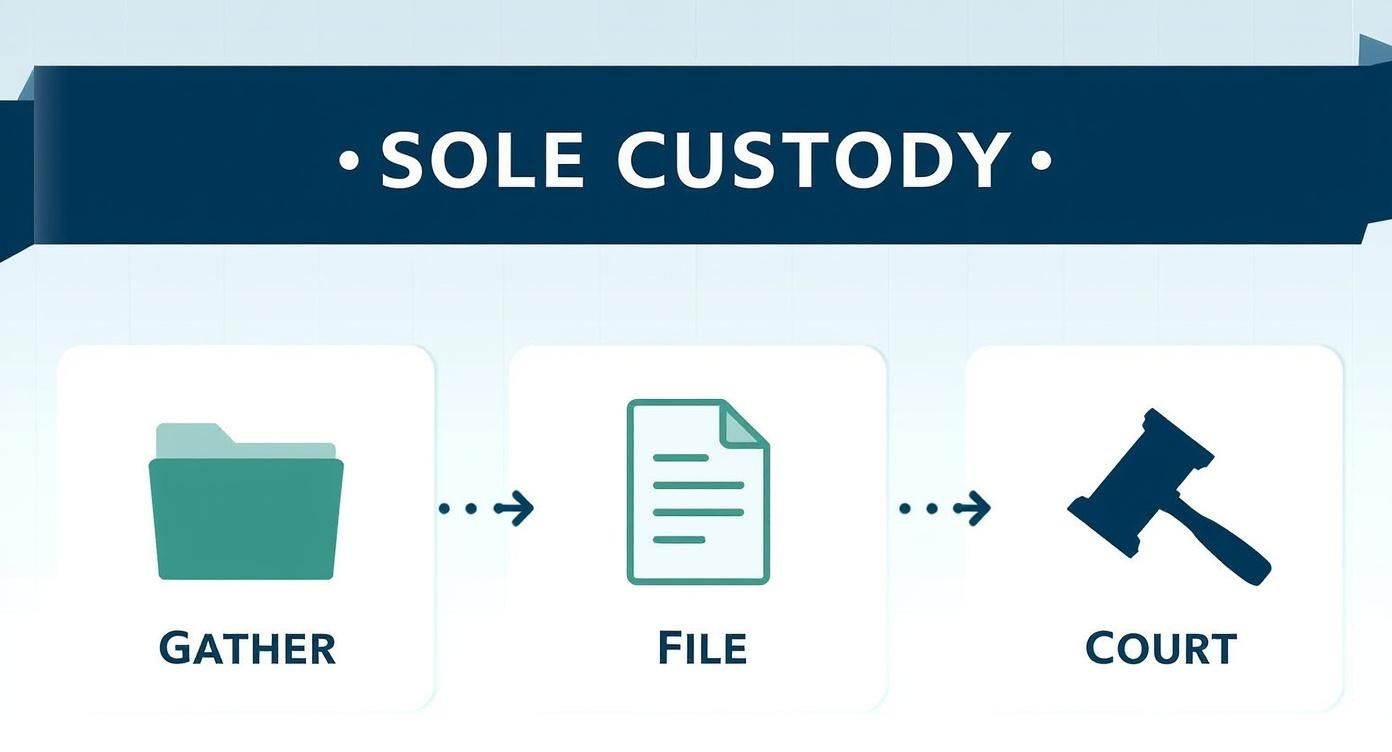
Appeals follow a strict timeline under the Texas Rules of Appellate Procedure:
- Notice of Appeal (Rule 25.1): File within 30 days after the trial court signs its final order (60 days with extension).
- Record Preparation (Rule 34): Designate and file the clerk’s record and reporter’s record. This includes the final custody order, transcripts, exhibits, and objections preserved at trial.
- Briefing (Rule 38):
• Appellant’s Brief: Present your legal issues, facts, and arguments.
• Appellee’s Brief: The other side responds.
• Reply Brief: Optional counter to the appellee. - Oral Argument (Rule 39): If requested and granted, each side has 10–15 minutes to present key points.
- Decision and Mandate (Rule 18): The appellate court issues a written opinion. If they reverse, they may remand the case for a new trial or modify the order.
For a detailed overview, see our Appellate Procedure Overview.
Record Preparation: The Foundation of Your Appeal

Your appeal lives or dies on the record. Appellate courts cannot consider evidence not introduced at trial. Key steps:
• Clerk’s Record: Includes pleadings, motions, orders, and exhibits. File the designation within 15 days after the notice of appeal.
• Reporter’s Record: Transcripts of hearings and trial testimony. Request and pay for transcription within the same period.
• Supplementing the Record: If crucial evidence is missing, you can file a motion to supplement.
A well-organized record—indexed chronologically—ensures you can cite page and exhibit numbers accurately in your brief.
Briefing on Appeal: Crafting Persuasive Arguments
Your appellant’s brief is your primary tool to persuade the court. It must contain:
• A table of contents and index of authorities
• A concise statement of the case and statement of facts with record citations
• Issues presented framed as questions of law
• Argument sections explaining why the trial court’s ruling was erroneous under applicable standards
• A prayer requesting relief (e.g., reverse and remand)
Tips for effective briefing:
• Focus on one or two compelling errors. More issues dilute your argument.
• Use plain English. Avoid legalese while retaining accuracy.
• Cite binding authority—cases from Texas Supreme Court and appellate precedents.
• Highlight reversible error and show how it affected the child’s best interest.
Oral Argument: The Final Advocacy Stage
While not guaranteed, oral argument offers a chance to underscore critical points. Prepare by:
• Identifying three key issues
• Practicing concise responses to likely questions from judges
• Maintaining a calm, confident demeanor—your tone can reinforce your written work
Common Reversible Errors in Texas Family Courts
Understanding typical trial court mistakes helps you spot appealable issues:
• Excluding critical evidence: Denying admission of expert evaluations on parenting risk
• Admitting hearsay without exception: Letting in third-party statements that violate the Texas Rules of Evidence
• Ignoring mandatory statutory factors: Failing to consider best-interest elements under Texas Family Code §153.002
• Misapplying the standard of review: Treating de novo questions as discretionary, or vice versa
• Improper jury instructions: Although rare in custody cases, incorrect legal standards in jury cases can be appealed
Appeals vs. Trials: Key Differences
| Aspect | Trial Court | Appellate Court |
|---|---|---|
| Purpose | Evaluate facts, witness credibility | Review legal errors in trial record |
| Evidence | Live testimony, exhibits admitted | No new evidence; rely on the record |
| Fact Finding | Judge or jury makes factual determinations | Deferential to trial court (abuse of discretion) |
| Outcome | Final order on custody | Affirm, reverse, or remand the case |
| Timeline | Months to years (initial case) | ~6–12 months after notice of appeal |
FAQs: Appellate Custody Appeals
Do I have a right to appeal a sole custody order?
Yes. Under Texas Rule of Appellate Procedure 25.1, you have 30 days after the final order to file your notice of appeal.
What is an “abuse of discretion”?
When a trial judge’s decision is so arbitrary or unreasonable that no reasonable person would make the same choice. On appeal, you argue the judge exceeded their lawful bounds.
Can I request emergency relief on appeal?
Texas law does not provide temporary custody orders on appeal. You must seek emergency orders at the trial level. However, you can request an expedited appeal schedule in extraordinary cases.
How do I define “reversible error”?
A legal mistake in applying procedure or law that likely affected the outcome. Not every mistake warrants reversal; it must be “reasonably calculated to cause and probably did cause” rendition of improper judgment.
Resources for Family Law Appeals
For related guidance on custody and family law appeals, explore:
• Appeals in divorce and property division
• Protective order appeals
• Child custody appeals in Texas
Our articles on joint custody in Texas and divorce mediation vs litigation also offer strategic insights.
Strong Reassuring CTA
If you believe the court made a mistake in your family law case, our appellate attorneys can help you seek a fair outcome. Contact The Law Office of Bryan Fagan today for a free consultation.