When a judge finalizes an adoption, it is meant to be a moment of joy and legal finality. But what happens if you believe the court’s decision was fundamentally flawed? You may feel your case was handled unfairly, that critical evidence was ignored, or that the law was misapplied. If you believe the court made a serious mistake in terminating parental rights or granting an adoption, you are not without options. The Texas appellate process exists to provide a path to seek justice.
The cost for adoption in Texas is not only financial; the emotional and legal stakes are incredibly high. An incorrect ruling can have devastating, lifelong consequences. Understanding your right to appeal is the first step toward correcting a legal error and seeking a fair outcome.
What You Can Appeal in an Adoption Case
You cannot appeal a judge’s decision simply because you disagree with the outcome. An appeal must be based on a “reversible error”—a specific mistake made by the trial court that likely led to an improper judgment. In the context of adoption and the termination of parental rights, these cases are subject to strict legal standards under the Texas Family Code and the Texas Rules of Appellate Procedure.
An appeal is not a new trial. No new evidence or testimony is presented. Instead, a higher court reviews the existing record from the original case to determine if the judge made a critical legal or procedural error.
Common Reversible Errors in Adoption and Termination Cases
Because terminating a parent’s rights is a permanent and profound legal action, the law sets a very high bar for the court. Common grounds for an appeal include:
- Insufficient Evidence: The party seeking to terminate parental rights must prove their case with "clear and convincing evidence." If the appellate court finds the evidence presented at trial does not meet this high standard, the decision may be reversed.
- Abuse of Discretion: This legal term means the trial judge made a decision that was arbitrary, unreasonable, or without reference to any guiding rules and principles. For example, if a judge ignored crucial evidence or misapplied the "best interest of the child" standard, it could be considered an abuse of discretion.
- Procedural Errors: The Texas Rules of Appellate Procedure and the Texas Family Code have strict requirements for how these cases must be handled. Errors in legal procedure, such as failing to properly serve a party with notice or denying a parent due process, can be grounds for a successful appeal.
- Incorrect Application of the Law: The trial judge may have misinterpreted or misapplied a relevant statute from the Texas Family Code, leading to an unjust outcome.
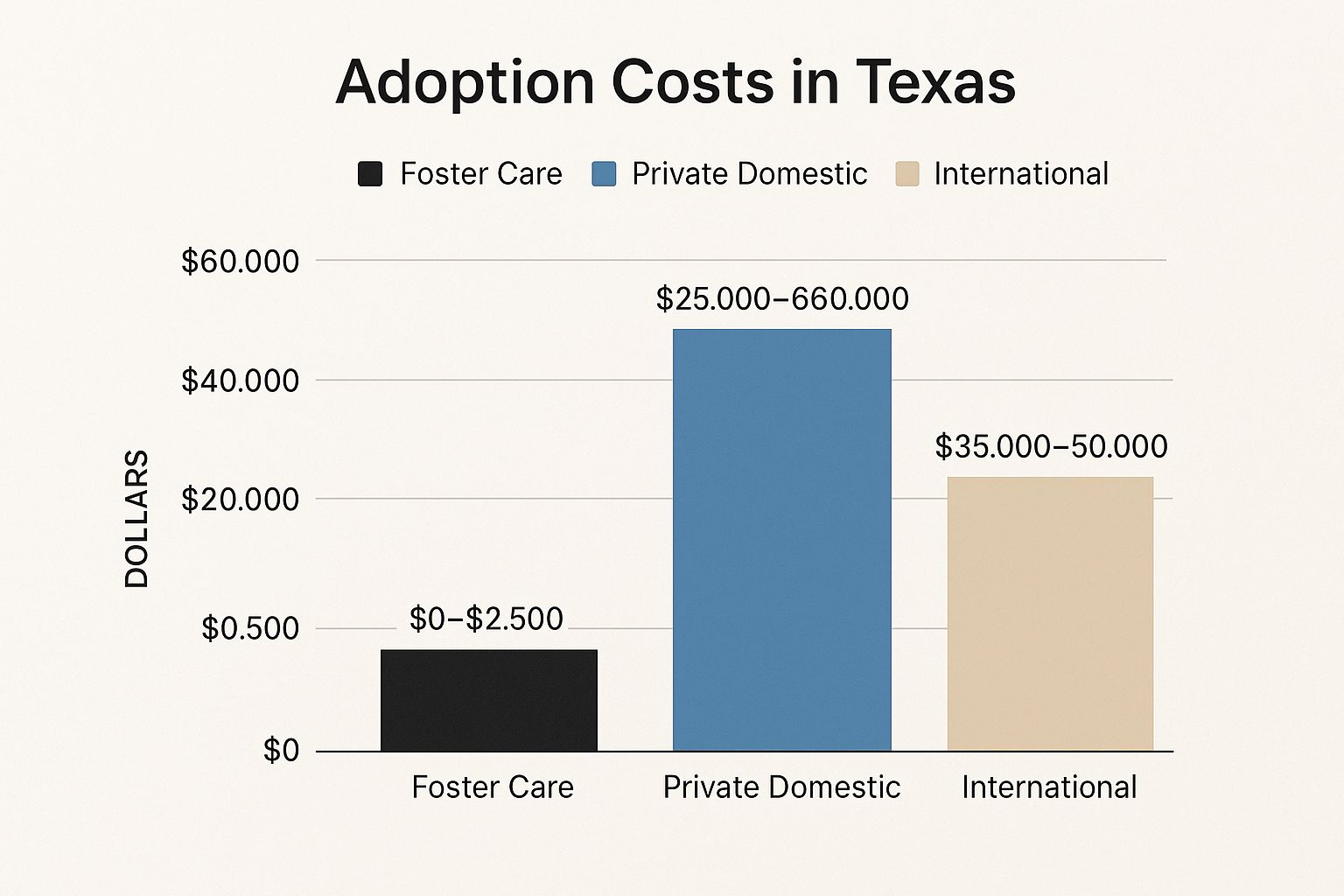
Navigating these complex legal arguments requires deep knowledge of appellate law. The financial aspects of adoption are often compared to other family law matters, and you can see a different perspective in our guide on the cost of divorce in Texas. However, the fight to preserve or challenge parental rights is a unique legal battleground.
For more context on the financial side of adoption, you can review this 2025 Texas adoption price guide.
The Texas Appellate Process at a Glance
Appealing an adoption or termination order follows a strict, deadline-driven procedure. Here is a simplified step-by-step overview:
| Stage of Appeal | What Happens | Key Deadline |
|---|---|---|
| Notice of Appeal | A formal document is filed with the trial court and court of appeals, stating your intent to appeal the judgment. | Typically due 30 days after the final judgment is signed (accelerated in termination cases). |
| Record Preparation | The court reporter prepares a transcript of the trial, and the court clerk gathers all documents filed in the case. This becomes the "appellate record." | The record must be requested and paid for promptly after filing the notice of appeal. |
| Briefing | Your appellate attorney writes a detailed legal argument (the "brief") explaining the trial court's errors, citing case law and the record. | The Appellant's Brief is typically due 30 days after the record is filed. |
| Oral Argument | In some cases, attorneys present their arguments directly to a panel of appellate judges, who ask questions about the case. | Scheduled by the court of appeals after briefing is complete. |
| The Decision | The appellate court issues a written opinion that either affirms (upholds), reverses (overturns), or remands (sends back) the trial court's decision. | Can take several months after briefing or oral argument. |
Understanding these steps is crucial. Missing a deadline can result in your appeal being dismissed, permanently closing the door to seeking justice.
The Standard of Review in Adoption Appeals
One of the most important concepts in appellate law is the "standard of review." This is the lens through which the appellate court examines the trial court's decision. It determines how much deference the higher court gives to the original judge's rulings.

In adoption and termination cases, different standards apply to different types of errors.
Abuse of Discretion vs. Legal and Factual Sufficiency
These legal terms define how an appeal is argued and won.
- Abuse of Discretion: This standard is used to review decisions that are within the trial judge's power to make, such as determining the best interest of a child. To win, your attorney must show the judge’s decision was so unreasonable or arbitrary that it fell outside the zone of reasonable disagreement. This is a challenging standard to meet.
- Legal and Factual Sufficiency: This standard applies to the evidence itself. A "legal sufficiency" challenge argues that there is no evidence to support a key finding. A "factual sufficiency" challenge argues that the evidence is so weak that the finding is clearly wrong and unjust. In termination cases, where the standard of proof is "clear and convincing," these arguments are powerful tools.
An appellate attorney's job is to analyze the trial record, identify the specific type of error made, and frame the legal argument under the correct standard of review. This strategic approach is essential for a successful appeal and ensures the court focuses on the critical issue: whether justice was served.
Understanding the difference is key. A skilled appellate lawyer knows which standard to apply to each issue, which is often the difference between winning and losing an appeal. The focus is not on re-telling your story, but on proving that a reversible error occurred according to the precise rules of appellate procedure. You can find further details in the breakdown of Texas adoption costs.
The Importance of Experienced Appellate Counsel
Appellate law is a highly specialized field. It requires a different skill set than trial law. A trial lawyer’s strength is in presenting evidence and persuading a judge or jury. An appellate lawyer’s strength is in deep legal research, persuasive writing, and navigating the complex Texas Rules of Appellate Procedure.
You would not hire a family doctor to perform heart surgery, and you should not rely on a trial attorney to handle a complex appeal. An appellate specialist provides a fresh, objective perspective focused solely on identifying legal errors in the record.
What an Appellate Attorney Does
The work of an appellate lawyer is meticulous and strategic.
- Record Review: Your attorney will conduct a thorough review of the entire case file, including every transcript, exhibit, and motion, searching for reversible errors.
- Legal Research: They will research relevant statutes and case law to build a strong legal foundation for your arguments.
- Briefing: This is the core of the appeal. Your attorney will draft a compelling, well-reasoned brief that clearly explains to the appellate judges why the trial court's decision was wrong and must be reversed.
- Oral Argument: If the court grants oral argument, your attorney will present your case to the panel of judges and answer their challenging questions with confidence and precision.
The Financial Realities of an Appeal
The cost for adoption in Texas at the trial level can be significant, and an appeal is an additional legal proceeding with its own costs. These costs typically include attorney's fees, the expense of preparing the official appellate record, and filing fees. However, when your parental rights or the future of your family is at stake, the cost of an appeal can be an essential investment in seeking a just outcome. A reputable appellate firm will provide a clear fee structure and explain the potential costs upfront.
For a broader financial perspective, you can review this article on understanding the average cost of adoption in Texas.
Choosing an attorney with specific experience in Texas family law appeals is critical. They understand the nuances of the Texas Family Code and have a proven track record of crafting successful arguments before the courts of appeals.
The deadlines in an appeal are unforgiving. It is vital to contact an appellate attorney immediately after an unfavorable judgment to preserve your right to seek review.
Seeking Justice After an International Adoption Ruling
Appealing a Texas court’s decision regarding an international adoption adds another layer of legal complexity. These cases involve not only the Texas Family Code but also federal immigration laws and potentially international treaties like the Hague Convention. The stakes are just as high, and the need for specialized appellate counsel is even more critical.

Errors in these cases can occur if the trial court failed to properly apply international law, misinterpreted federal statutes governing intercountry adoption, or violated due process. An appellate attorney must be adept at untangling these intersecting legal frameworks to build a successful appeal.
How Appeals Preserve Fairness and Due Process
Let's be blunt: judges can make mistakes. The appellate process is the fundamental safeguard our legal system provides to correct those mistakes. It ensures that every decision impacting a family is grounded in the correct application of the law and supported by sufficient evidence.
This is why having an experienced appellate attorney is not a luxury; it's a necessity for ensuring fairness. They are the experts who hold the trial court accountable to the rule of law. Their work protects your constitutional right to due process and fights to restore balance when a case has been decided unfairly.
Funding an Appeal and Protecting Your Rights
The cost of an appeal is a practical concern, but it should not be a barrier to seeking justice. When you consult with an appellate attorney, they will discuss the fee structure and the estimated costs involved. This often includes a flat fee or retainer for the extensive work of reviewing the record and writing the brief.
Remember, the goal of an appeal is to correct a serious legal error that has profoundly impacted your family. It is an investment in restoring fairness and due process. For more information and legal guidance, you can find a wealth of information in our appellate law resources.
Take the Next Step to Seek a Fair Outcome
If a Texas court has issued an order in an adoption or parental rights termination case that you believe is legally wrong, you must act quickly. The deadlines to file an appeal are short and unforgiving. The first step is to get an expert evaluation of your case from an attorney who specializes in family law appeals.
An appellate attorney can review the trial court record and give you an honest assessment of whether a reversible error occurred and the likelihood of success on appeal. This consultation provides the clarity you need to make an informed decision about your future.
If you believe the court made a mistake in your family law case, our appellate attorneys can help you seek a fair outcome. Contact The Law Office of Bryan Fagan today for a free consultation.
Common Questions About Adoption Appeals in Texas
When facing the prospect of an appeal, you likely have many urgent questions. This is a complex area of law, and understanding your rights and the process is essential. Below are answers to some of the most common questions we receive about appealing adoption and termination rulings.
The goal is to provide plain-English definitions and clear insights so you can move forward with confidence.
What is a "reversible error"?
A reversible error is a legal mistake made by the trial judge that was significant enough to have likely caused an incorrect judgment. It’s not a minor technicality. It must be an error—such as misapplying the law or admitting improper evidence—that harmed your case and affected the final outcome. An appellate court must find a reversible error to overturn a trial court’s decision.
How is an appeal different from a trial?
A trial is about establishing the facts of a case by presenting evidence and witness testimony. An appeal is about reviewing whether the trial was conducted correctly according to the law. There are no witnesses, juries, or new evidence in an appeal. Your appellate attorney makes legal arguments to a panel of judges based only on the written record from the original trial.
What does "abuse of discretion" really mean?
"Abuse of discretion" is the standard of review appellate courts use to evaluate many of a trial judge's decisions. It means the judge made a decision that was arbitrary, unreasonable, or made without considering the guiding legal principles. It's a high standard to meet, but in family law, where a judge's ruling can drastically alter lives, showing that a decision was an abuse of discretion can be a powerful basis for an appeal. You can also review our frequently asked questions for more legal definitions.
What is "briefing"?
"Briefing" is the process of writing the main legal argument for the appeal. The appellant's brief is a detailed, formal document submitted to the court of appeals. It identifies the errors made by the trial court, cites relevant laws and prior court cases (precedent), and explains why the decision should be overturned. This document is the foundation of every successful appeal.
How long does an appeal take in Texas?
The timeline for an appeal can vary significantly depending on the complexity of the case and the court's docket. From filing the notice of appeal to receiving a final decision, the process typically takes anywhere from nine months to over a year. Cases involving the termination of parental rights are often given priority and may proceed on an accelerated timeline.