When a judge signs the Final Decree of Divorce, seeing the outcome in black and white can be devastating. You may feel your case was handled unfairly, that the judge misunderstood crucial facts, or that the ruling about your property or children is fundamentally unjust. It’s easy to feel powerless in that moment, but the judge’s signature isn't necessarily the final word.
If you believe the court made a serious legal mistake, the Texas legal system provides a path to seek a fair outcome: an appeal. It's a process designed to restore balance and ensure the law was applied correctly. However, it's critical to understand that appealing a divorce decree in Texas is not a second trial or a "do-over." It is a technical legal challenge focused on correcting errors made by the trial court.
The goal is to demonstrate to a higher court—a panel of appellate justices—that the trial judge made a legal error so significant that it likely led to the wrong result in your case.
Understanding the Grounds for a Texas Divorce Appeal

An appeal isn't based on your dissatisfaction with the outcome. It must be built on a solid legal foundation. To successfully challenge a divorce decree, your appellate attorney must identify a "reversible error" in the trial record.
What is Reversible Error?
A reversible error is a legal term for a mistake made by the trial judge that was substantial enough to have likely caused an improper judgment. Not every minor misstep qualifies. The error must have been harmful, meaning that without it, the outcome of your case would probably have been different.
Think of an appeal as asking a review panel to analyze the game film from your trial. The appellate justices weren't on the field, so they can only review what was officially recorded. Their job is to determine if the referee—the trial judge—made a bad call that unfairly changed the final score. A minor procedural slip-up might be noted, but only a game-changing error will lead to the outcome being overturned.
A common example of reversible error is a judge misclassifying your separate property (like an inheritance kept apart from marital funds) as community property and dividing it with your ex-spouse. This is a clear misapplication of the Texas Family Code that directly and unfairly impacts the final property division.
The Standard of Review: "Abuse of Discretion"
In family law, many appeals are based on an "abuse of discretion." This is the standard of review the appellate court uses to evaluate many of the trial judge's decisions.
Abuse of Discretion (Plain English): This legal term means the trial judge made a decision that was arbitrary, unreasonable, or without reference to any guiding legal rules or principles. In other words, no reasonable judge, looking at the same facts and law, would have made a similar ruling.
Proving an abuse of discretion is a high bar, but it is the key to challenging unjust rulings on matters like child custody, geographic restrictions, or unequal property divisions.
What You Can Appeal in a Texas Divorce Case
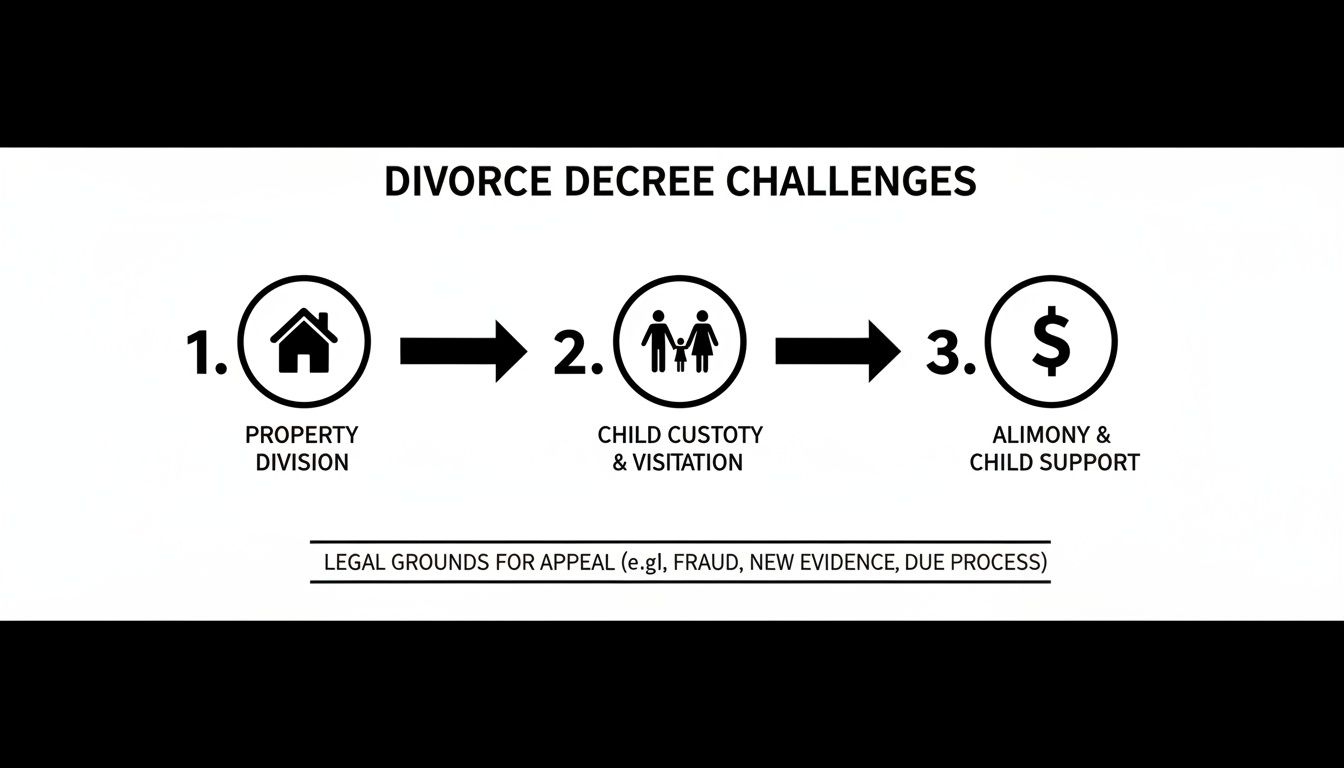
While you may feel the entire outcome of your divorce was wrong, a successful appeal targets specific, critical legal errors. Most successful divorce appeals focus on one of these key areas where trial judges have significant discretion but must still follow the law.
Errors in Property Division
The Texas Family Code requires a "just and right" division of your community estate. While this doesn't always mean a 50/50 split, the division must be equitable and based on the facts and law. When a judge’s decision on property division deviates from this standard, it may be reversible error.
Common grounds for appeal include:
- Mischaracterization of Property: The judge incorrectly labels your separate property—assets owned before marriage, or received by gift or inheritance—as community property and divides it.
- Grossly Unequal Division: The property split is heavily skewed in one spouse's favor without a strong, legally recognized reason, such as proven fault in the breakup of the marriage or a significant disparity in earning capacity.
- Incorrect Asset Valuation: The court relies on a clearly erroneous value for a major asset, like a business or real estate, which makes the entire division inherently unfair.
Mistakes in Child Custody Orders
In Texas, all decisions about child custody must be based on the "best interest of the child." An appeal becomes necessary when a judge’s order appears to ignore this guiding principle or is based on legally improper factors.
With Texas courts handling a staggering 7.9 million new filings and achieving a 103% clearance rate in fiscal year 2024, the pressure to move cases can sometimes lead to mistakes that have a lasting impact on a child's life. You can find more on Texas judicial data from the official Texas Courts report.
Strong grounds for appealing a custody order often involve situations where the judge:
- Ignored credible evidence of family violence, substance abuse, or other behaviors that endanger a child.
- Based a decision on a parent's gender, lifestyle, or religion without any evidence of harm to the child.
- Imposed a geographic restriction that was not supported by the evidence and unnecessarily damages the parent-child relationship.
Flawed Child Support and Spousal Maintenance Rulings
Financial orders determine your family's stability. Because child support and spousal maintenance are guided by formulas and strict requirements in the Texas Family Code, a judge who deviates from them without a clear, legally sound reason may have committed a reversible error. For example, a judge might miscalculate a parent's net resources for child support or award spousal maintenance when the receiving spouse did not meet the legal eligibility criteria. New laws taking effect in 2025 will also extend the life of protective orders, making it even more vital to challenge erroneous rulings promptly.
Understanding the Strict Timelines for a Texas Divorce Appeal
In appellate law, deadlines are not suggestions—they are absolute. Missing a deadline can permanently close the door on your right to challenge an unjust divorce decree, no matter how strong your case is. The Texas Rules of Appellate Procedure are unforgiving.
The First Hurdle: The 30-Day Deadline for Notice of Appeal
The clock starts ticking the moment the judge signs the Final Decree of Divorce. In most cases, you have only 30 days from that date to file a Notice of Appeal. This document formally notifies the court and the opposing party of your intent to challenge the ruling. If you file on day 31, you will almost certainly lose your right to appeal forever.
This tight window means you must act with urgency. With Texas courts managing over 7.9 million new cases in fiscal year 2024, the system relies on these firm deadlines to function. You can read more about Texas court statistics on centraltexaslawyers.com.
However, there is a common and vital strategy to extend this timeline. Filing a Motion for New Trial or a similar post-judgment motion extends your deadline to file a Notice of Appeal to 90 days from the date the decree was signed. While these motions are rarely granted by the trial judge, filing one is a crucial tactical step that gives your appellate attorney the time needed to obtain the record and begin building your case. We explain this in more detail in our guide on how long you have to appeal a divorce in Texas.
How an Appeal Differs From a Trial
Many people mistakenly believe an appeal is a second chance to tell their story. It is not. The rules, purpose, and procedures are fundamentally different from a trial.
Texas Divorce Trial vs. Appeal: A Comparison
| Aspect | Trial Court Process | Appellate Court Process |
|---|---|---|
| Purpose | To present evidence, examine witnesses, and determine the facts of the case. | To review the trial record for legal errors made by the judge. |
| Key Players | Judge, parties, trial attorneys, witnesses, and sometimes a jury. | A panel of appellate justices and appellate attorneys. No witnesses or jury. |
| Evidence | New evidence, documents, and testimony are presented and considered. | No new evidence is allowed. The review is strictly limited to the existing record. |
| Timeline | Can take months or years, culminating in a final trial. | Follows a strict procedural calendar, typically lasting from 9 months to over a year. |
Because the timelines for appealing a divorce decree in Texas are so rigid and the process is so different from a trial, you must contact an appellate attorney immediately after your decree is signed to protect your rights.
Identifying Reversible Errors in Your Divorce Case
When you feel the outcome of your divorce was deeply unfair, it’s natural to believe the judge made mistakes. However, for an appeal to succeed, your attorney must identify a specific kind of mistake: a reversible error.
An appellate court does not re-weigh the evidence or second-guess the trial judge’s credibility determinations. Its role is to review the cold, hard record for a legal blunder so serious that it likely caused an improper judgment.
What Makes an Error "Reversible"?
To win an appeal, your attorney must prove two things to the higher court:
- A legal error occurred.
- The error was harmful—meaning it directly and negatively impacted the final outcome of your case.
If the mistake had not occurred, would the final decree have been different? If the answer is yes, you may have grounds for an appeal. A "harmless error," while frustrating, is not enough to get the judgment overturned.
Common Examples of Reversible Error
While every case is unique, certain types of reversible errors appear frequently in Texas family law appeals:
- Misapplication of the Texas Family Code: The judge got the law wrong, such as by mischaracterizing your separate property as community property and dividing it.
- Improperly Admitting or Excluding Evidence: The judge allowed the other side to present inadmissible evidence (like unreliable hearsay) or refused to let you present crucial evidence that could have proven your case.
- Abuse of Discretion: The judge made a ruling that was arbitrary or unreasonable. A custody decision that ignores overwhelming evidence about a child's best interests is a classic example. You can learn more about this concept in our post about reversible error in a Texas family court.
Appeals often arise from financial issues, such as one party hiding assets. Understanding how forensic accountants find hidden assets can shed light on the complexity of uncovering these issues at trial, which can sometimes lead to errors. The first step toward seeking justice is having an expert analyze your trial record to identify an error that truly mattered.
Why You Need a Dedicated Appellate Attorney

Winning a divorce trial and winning a divorce appeal require vastly different skills. The same attorney who fought for you in the courtroom may not be the best choice to handle your appeal. This is not a reflection on their trial skills; it is a recognition that appellate law is a highly specialized field.
A trial is about building a case from scratch by presenting evidence and persuading a single judge. An appeal is a slow, academic process of deconstructing the trial to find a critical legal error. The goal is to prove to a panel of experienced judges that the trial court misapplied the law, leading to an unfair result.
The Different Mindset of an Appellate Lawyer
An appellate specialist brings a fresh, objective perspective to your case. They are not emotionally invested in the trial's history. Their sole mission is to methodically scour the official record—every transcript page and every document—to find preserved legal errors.
This focused work involves:
- Deep Record Analysis: Painstakingly reviewing the trial record to identify potential reversible errors that were properly preserved for appeal.
- Intensive Legal Research: Digging through decades of Texas case law to find legal precedent that supports your argument.
- Persuasive Legal Writing: Crafting a highly structured and formal appellate brief—the core of your appeal—to present a powerful, logical argument to the appellate justices.
Briefing (Plain English): This is the formal term for writing and submitting your legal arguments to the court of appeals. The "brief" is a detailed document that lays out the facts, identifies the trial court's specific errors, and uses legal authority (like statutes and past cases) to argue why the original decision should be changed.
Think of your trial attorney as the case's architect. The appellate attorney is the master inspector, brought in to find hidden structural flaws that others missed.
Why a Fresh Pair of Eyes Is Crucial
It is difficult for anyone to find fault in their own work. An attorney who handled the trial may unintentionally overlook potential appealable errors. An appellate lawyer provides an objective review, which is a massive advantage when appealing a divorce decree in Texas.
At The Law Office of Bryan Fagan, our appellate division is dedicated exclusively to this specialized work. We combine powerful legal writing with a deep knowledge of appellate procedure to frame your case in a way that resonates with appellate courts. If you are weighing your options, our guide on how to choose a family law attorney can also offer helpful perspective. Hiring a dedicated appellate attorney gives you the advantage of a true specialist who can improve your chances of achieving a fair outcome.
Take the First Step Toward a Fair Outcome
If you feel the outcome of your divorce was deeply unfair, that feeling is the first sign you may need to explore an appeal. While appealing a divorce decree in Texas is a complex and demanding process, it exists to correct legal mistakes and ensure justice is served.
An appeal is not a second chance to tell your story or present new evidence. It is a focused legal argument designed to show a higher court that the trial judge made a specific, significant error in applying the law.
Your Path to a Just Result
Remember these core principles when considering an appeal:
- Appeals are about law, not facts. The appellate court will not re-weigh evidence but will review the record to determine if the trial judge made a reversible error by misinterpreting the law or abusing their discretion.
- Deadlines are absolute. The Texas Rules of Appellate Procedure are strict. Missing the deadline to file your Notice of Appeal can permanently end your case.
- Specialized expertise is crucial. Appellate work requires a different skillset than trial work, centered on record review, legal research, and persuasive legal writing (briefing).
Your financial future and parental rights are too important to leave to an unjust ruling. If a serious mistake was made in your property division, custody orders, or another key part of your divorce decree, you have the right to seek a fair result through the appellate system.
If you believe the court made a mistake in your family law case, our appellate attorneys can help you seek a fair outcome. Contact The Law Office of Bryan Fagan today for a free consultation.
Answers to Your Pressing Divorce Appeal Questions
Considering an appeal raises many questions. The process is entirely different from a trial, and it's normal to feel uncertain. Here are plain-English answers to some of the most common questions our clients ask.
How Long Does a Divorce Appeal Take in Texas?
An appeal is not a quick fix. You should realistically prepare for the process to take anywhere from nine months to over a year, depending on the complexity of your case and the specific court of appeals' caseload. The process involves multiple steps with firm deadlines, from preparing the appellate record to the back-and-forth briefing schedule where written arguments are submitted. A patient, strategic approach is essential.
Can I Submit New Evidence During My Appeal?
No. This is one of the most critical differences between a trial and an appeal. The appellate court does not rehear the case or consider new evidence. The justices are strictly limited to reviewing the official "appellate record" from the trial court. This record consists of:
- The Clerk’s Record: All documents officially filed in your case.
- The Reporter’s Record: A word-for-word transcript of everything said in court.
The appeal focuses solely on determining if the trial judge made a legal mistake based on the evidence and arguments presented at that time.
What Does It Mean to Preserve Error for an Appeal?
For an appellate court to review a mistake made during trial, your lawyer must have made a timely and specific objection. This is called "preserving the error." If a proper objection was not made in the trial court, the appellate court will almost certainly refuse to consider the issue, no matter how unfair it seems. A crucial part of an appellate attorney's initial review is to search the record for errors that were properly preserved and can form the basis of a strong appeal.
What Are the Possible Outcomes of a Divorce Appeal?
After reviewing the briefs (and sometimes hearing oral arguments), the appellate court will issue a written decision with one of three primary outcomes:
- Affirm: The court finds no reversible error and agrees with the trial court's decision. The original divorce decree stands.
- Reverse and Render: The court finds a significant error, overturns the trial court's decision, and issues its own judgment. This is a complete victory but is less common.
- Reverse and Remand: This is a frequent outcome. The court finds a reversible error and overturns all or part of the judgment. It then sends the case back ("remands" it) to the trial court with instructions to fix the mistake, which may require a new hearing or trial on that specific issue.
If you believe a legal error marred your family law case, let us help you seek the fair outcome you deserve. Contact The Law Office of Bryan Fagan, PLLC today for a free consultation at https://familylawcourtappeals.com.