You may feel your case was handled unfairly and that the final custody order does not serve your child's best interests. This feeling is not uncommon, and it's important to know that an unfair trial court decision does not have to be the final word. Winning a custody battle is about more than the trial; it's about strategic preparation that protects your child and preserves your right to seek justice through the appeals process if the court gets it wrong.
This guide provides a roadmap for navigating a Texas custody case with an eye toward both a successful trial and a potential appeal. We will explore the key legal standards, the evidence that matters, and the critical steps you must take to build a strong record. If the judge makes a reversible error—a legal mistake significant enough to have changed the outcome—a well-preserved record is your only path to a fair result. We will explain these concepts in plain English, empowering you to make confident, strategic decisions from your first hearing through a potential appeal.
Understanding the Standard of Review in Texas Custody Cases
In Texas, every decision in a custody case, legally known as a "suit affecting the parent-child relationship," is governed by one guiding principle: the best interest of the child.
This is not just a phrase; it is the legal standard judges must apply. They evaluate a set of criteria called the "Holley Factors" to determine what arrangement best serves a child's physical and emotional well-being. Your entire case must be built around proving, with clear evidence, how your care meets these factors.
Custody cases are rarely straightforward. They are shaped by the history of caregiving and can involve complex issues like parental alienation. Understanding the data behind these situations can give you valuable context. For a deeper dive, you can explore comprehensive custody battle statistics and findings. This knowledge helps you and your lawyer anticipate challenges and focus your efforts on what truly matters to the court.
Key Factors Influencing Texas Custody Decisions
Texas courts prioritize the 'best interest of the child.' The table below breaks down the primary factors, known as the Holley Factors, that judges use to make their final decision. Think of this as the court's checklist.
| Factor (Holley Factors) | What It Means for Your Case | Example Evidence |
|---|---|---|
| Child's Needs | The court looks at the child's emotional, physical, and developmental needs now and in the future. | Testimony from teachers, report cards, doctor's records, photos of the child's living space. |
| Parental Abilities | This assesses each parent's ability to provide a safe, stable, and nurturing home. | Your testimony on daily routines, witness statements from friends/family, proof of stable employment. |
| Stability of the Home | The judge considers which parent can offer a more consistent and stable environment. | Evidence of long-term residence, school continuity, established community ties (church, sports). |
| Child's Desires | If the child is 12 or older, the judge will interview them in chambers to hear their preference. | The child's in-chambers testimony (you won't be present). |
| Danger to Child | The court evaluates any immediate or future physical or emotional danger to the child. | Police reports, CPS records, text messages showing threats, drug test results, testimony about abuse. |
| Parental Acts/Omissions | This covers parental behavior that could show an improper relationship or poor judgment. | Evidence of neglect, substance abuse, criminal history, or exposing the child to inappropriate situations. |
| Programs for Parents | The court will consider programs available to help parents promote the child's best interest. | Certificates from parenting classes, anger management courses, or counseling records. |
Ultimately, your job is to present a compelling narrative, supported by credible evidence, that aligns with these factors. Each piece of evidence, from a school attendance record to a witness's testimony, should tie directly back to proving that your home is where the child's best interests will be served.
Building a Compelling Case Before Trial
The groundwork for a successful custody case is laid long before you enter a courtroom. The most critical battles are often won through meticulous preparation. Your objective is to build a clear, undeniable record showing the judge why you provide the most stable, nurturing, and consistent home for your child.
This is about weaving together a compelling, fact-based story of your life as a parent. By documenting your involvement in everything from homework to doctor's visits, you transform your claims from words into a concrete reality that is difficult for a court to ignore.

Gathering Essential Documentation
Texas family courts operate on tangible proof. While your testimony is important, verifiable documents are powerful. It is time to become an organized record-keeper.
Start gathering everything that paints a full picture of your child's life and your role in it.
- Educational Records: Collect report cards, attendance records, communication logs with teachers, emails about school projects, and notes from parent-teacher conferences to show your investment in their education.
- Medical and Dental Records: Create a file for every doctor's visit, prescription receipt, and dental check-up. This is hard evidence that you manage your child’s health and well-being.
- Financial Documents: Pay stubs, tax returns, and bank statements demonstrate your ability to provide financial stability, a key factor for any judge.
- Personal Calendar or Journal: Keep a detailed, daily log of your parenting time. Note when you have your child, what you did, and document every time the other parent misses or is late for their scheduled time.
In complex cases involving unique medical or psychological needs, an expert opinion can be invaluable. You might consider medico-legal consultancy services for specialized evaluations that can add significant weight to your evidence.
The Power of Credible Witnesses
Documents tell one part of the story; people tell the rest. The right witness can bring your parenting to life for a judge in a way that a stack of papers never could.
A teacher who can testify about your consistent involvement in parent-teacher conferences often carries more weight than a family member. The court views them as an objective party focused solely on the child's welfare.
Think about the people who have seen you in action as a parent. You are looking for individuals who can speak to your character, your bond with your child, and the positive environment you create.
Potential Witnesses May Include:
- Teachers or daycare providers
- Coaches or extracurricular leaders
- Counselors or therapists
- Neighbors or family friends who have seen your daily interactions
- A former partner of the other parent, if they can offer relevant testimony
These individuals add a human element and provide crucial context that documents alone cannot capture.
Using Digital Evidence Correctly
Text messages, emails, and social media posts are now central in many custody disputes. However, this evidence must be handled correctly to be admissible under the Texas Rules of Evidence.
First, it must be authenticated—a legal term meaning you must prove the communication came from the other person and has not been altered. Your attorney is essential in presenting this evidence properly. Remember, your own digital footprint is also subject to review, so be mindful of what you post.
If the other parent's communications are manipulative or attempt to turn your child against you, save everything. Understanding the different examples of parental alienation can help you spot this harmful behavior and document it effectively.
By methodically gathering this evidence, you are not just preparing for trial. You are building a comprehensive record that speaks directly to the "best interest of the child." If the outcome is unjust, this same record is what an appellate court will need to review for legal error.
Using Mediation to Your Advantage
While you must prepare for a courtroom battle, most Texas custody disputes are resolved before a final trial. Mediation, a mandatory step in nearly every family law case, is a powerful opportunity to achieve a favorable outcome.
Think of it not as a procedural hurdle, but as a chance to regain control, save significant financial and emotional resources, and build a workable co-parenting relationship.
Why Mediation Matters More Than You Think
It often surprises parents to learn that around 90% of custody cases settle before a judge makes a final ruling. The court system encourages parents to find their own solutions, believing it leads to less conflict and better outcomes for children. You can read more about how US family law trends show a strong preference for negotiation.
This systemic preference for settlement should give you confidence. You are participating in the single most likely path to resolving your case.
The Real Goal of Mediation: Keeping Control
Mediation is a private, confidential negotiation involving you, the other parent, your lawyers, and a neutral third-party mediator. The mediator’s job is not to assign blame but to help both sides find common ground.
In a trial, you hand over life-altering decisions about your child to a judge who has known your family for a very short time. In mediation, you and your attorney retain that power. This is your chance to craft a detailed parenting plan that works for your family’s unique situation, addressing everything from holiday schedules to decisions about extracurricular activities. For a deeper look at this, check out our guide on divorce mediation vs. litigation.
Strategies for a Successful Mediation
Success in mediation requires preparation and the right mindset. This is a high-stakes negotiation where a clear, child-focused strategy will make your positions more credible and increase your chances of a good result.
Here’s how to prepare:
- Know Your Priorities: Before mediation, identify your non-negotiable items and areas where you have flexibility. Is keeping your child in their current school district the top priority? Is a specific holiday schedule what matters most? Decide ahead of time.
- Bring a Blueprint: Work with your lawyer to draft a complete, detailed parenting plan to present as your starting offer. It should cover possession schedules, rights and duties, child support, and health insurance. A well-thought-out proposal shows you are serious and prepared.
- Think Three Moves Ahead: A good settlement anticipates future issues. Include terms for out-of-state travel, communication protocols, and a process for resolving future disagreements without returning to court.
- Stay Calm Under Pressure: Emotions will be high, but letting anger or frustration take over will weaken your position. Stick to the facts, always bring the focus back to your child's needs, and trust your attorney to handle the legal sparring.
A well-negotiated Mediated Settlement Agreement is more than just a contract; it's a roadmap for your family's future. Because it is binding and irrevocable once signed, it provides the certainty and finality that a trial often cannot guarantee.
A skilled family law attorney will help you see past the emotion, analyze what's on the table, and advise you on when to agree and when to walk away. Successful mediation is one of the most effective ways to win your custody case by securing a stable future for your child without the risk and uncertainty of trial.
What Happens When the Judge Gets It Wrong? Protecting Your Right to Appeal
Even with flawless preparation, a judge can make a mistake. You may leave the courtroom with a custody order that feels completely contrary to the evidence. While difficult, this is when winning your custody battle means challenging that decision through an appeal. To do this, you must understand the critical legal concept of preserving error.
This means laying the groundwork for an appeal during the trial itself. It involves specific, technical steps your trial lawyer must take to object to mistakes as they happen. If these issues are not properly documented in the official court record, an appellate court cannot review them. The unfair ruling will stand, no matter how wrong it was.
This strategic thinking is crucial from the very beginning, even in the negotiation and mediation phases.
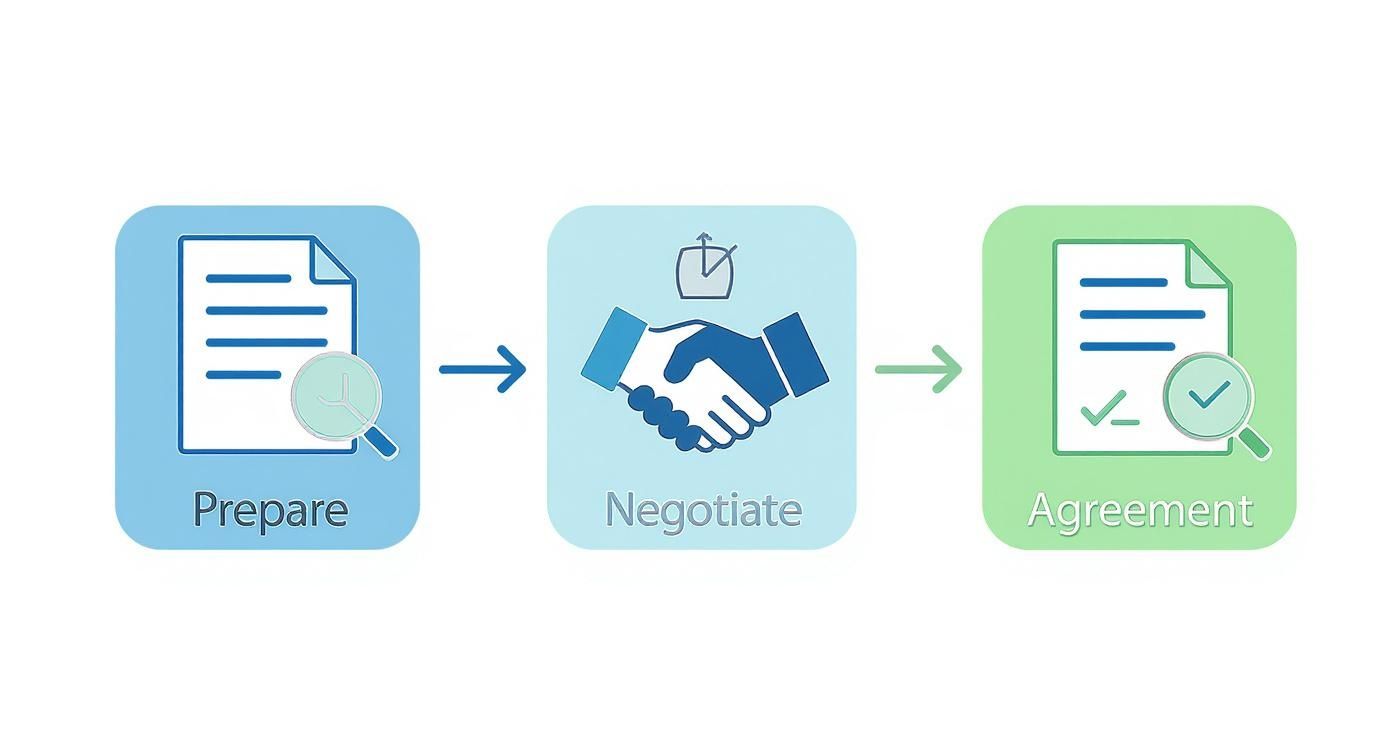
Just as each step in a negotiation requires careful planning, every moment in the courtroom demands vigilance to protect your future right to appeal.
How Appeals Differ from Trials
It is a common misconception that an appeal is a second trial. It is not. An appeal is a focused review of the trial record to determine if the judge made a significant legal mistake that changed the outcome. The appeal is decided based on written legal arguments, not new testimony.
For an appellate court to have anything to review, your lawyer must create a comprehensive record. This is required by the Texas Rules of Appellate Procedure.
Here’s what preserving error looks like in practice:
- Timely Objections: When the opposing side tries to introduce improper testimony or a misleading document, your lawyer must object immediately. A moment’s hesitation can waive the objection, meaning you lose the right to challenge it on appeal.
- Making an Offer of Proof: If the judge wrongly refuses to let you present crucial evidence, your attorney must make an "offer of proof." This is a formal way of stating for the record what the excluded evidence would have been, so the appellate court can see what the judge prevented the fact-finder from hearing.
- Getting a Clear Ruling: It’s not enough to object. Your attorney must press the judge for a clear, on-the-record ruling: "sustained" or "overruled." A vague response is often insufficient to preserve the error for appeal.
These actions are essential, non-negotiable steps that keep the door open for an appeal. Without them, even a blatant judicial error can become permanent.
Trial Phase vs Appellate Phase: A Comparison
Understanding the fundamental differences between how a trial court and an appellate court operate is key to managing your expectations and strategy.
| Aspect | Trial Court | Appellate Court |
|---|---|---|
| Primary Goal | To determine the facts of the case based on evidence and witness testimony. | To review the trial record for legal errors made by the judge. |
| New Evidence | New evidence and live witness testimony are the core of the proceeding. | Absolutely no new evidence or witnesses are allowed. |
| Key Player | The judge or jury acts as the "fact-finder." | A panel of justices reviews written arguments ("briefs") and the existing record. |
| Attorney's Focus | Presenting evidence, questioning witnesses, and making a persuasive case. | Identifying harmful legal errors and writing a detailed legal brief. |
This highlights why "preserving error" at trial is so critical. If a mistake isn't in the trial record, it effectively doesn't exist for the appellate court.
Legal Terms Defined: “Abuse of Discretion” and “Reversible Error”
In an appeal, you will encounter legal terms different from those used at trial. Two of the most important are "abuse of discretion" and "reversible error."
In Texas family law, trial judges have a great deal of "discretion," or latitude, in making decisions. An appeal isn't just about disagreeing with the outcome; it's about proving the judge abused that discretion.
Abuse of Discretion
This is the most common standard of review in custody appeals. It means the judge's decision was arbitrary, unreasonable, or made without reference to guiding legal rules or principles. It does not mean the judge acted in bad faith, but rather that the decision was not grounded in the facts or the law. For example, if a judge ignores undisputed evidence of a parent's ongoing substance abuse and awards that parent primary custody without ordering any safeguards, that could be an abuse of discretion.
Reversible Error
Not every mistake a judge makes is enough to overturn a decision. The error must be "reversible," meaning it was so significant that it probably caused an improper judgment. The key question is: Was the mistake harmful? Did it actually change the final outcome? A typo in an order is not a reversible error. But excluding the testimony of a key witness who observed abuse could be. An appellate attorney's primary job is to find these specific, harmful, and reversible errors in the trial record.
What You Can Appeal in a Texas Custody Case
Receiving a final custody order that you feel is unjust and harmful to your child can be devastating. It may feel like the end of the road, but a trial judge's ruling does not have to be the final word. The Texas legal system provides a path forward through an appeal, but you must act quickly and precisely.
An appeal is not a second trial. You cannot introduce new evidence or call new witnesses. Instead, it is a highly technical review of the trial record focused on one central question: did the trial judge make a significant legal mistake—a “reversible error”—that led to an improper outcome? The focus shifts from telling your story to proving that the law was misapplied.
The Texas Appellate Procedure in Plain English
The first and most critical step is filing a Notice of Appeal. The Texas Rules of Appellate Procedure provide a very short timeline—typically just 30 days from the date the judge signs the final order—to file this document. Missing this deadline is fatal to your case. If you are even one day late, the appellate court loses jurisdiction, and the trial court's order becomes permanent.
Once the notice is filed, the process moves from the courtroom to the written record. Your appellate attorney will meticulously review every page of the trial transcript and every exhibit to identify potential legal errors.
The appellate process includes several key phases:
- Record Preparation: Your legal team gathers the official court reporter’s transcript (every word spoken in court) and the clerk’s record (all documents filed in the case). This becomes the official record on appeal.
- Briefing: Your attorney writes a detailed legal argument, known as an appellate brief. This document identifies the errors, cites relevant laws and prior court decisions, and explains how those mistakes resulted in an improper judgment.
- Oral Argument: In some cases, the attorneys present their arguments in person before a panel of appellate justices, who will ask challenging questions to probe the strengths and weaknesses of each side's position.
- The Decision: The court of appeals issues a written opinion that either upholds (affirms) the trial court's decision, overturns it (reverses), or sends the case back to the trial court for further proceedings (remands).
Examples of Common Reversible Errors in Texas Family Courts
You cannot appeal a custody order simply because you disagree with the result. The appeal must be based on solid legal grounds. Common reversible errors in Texas custody cases include:
- Improperly Excluding or Admitting Evidence: The judge refused to allow critical testimony or documents (such as evidence of a parent's drug abuse or neglect) or allowed prejudicial and improper evidence to be considered.
- Misapplication of the Law: The court misinterpreted or ignored key provisions of the Texas Family Code, particularly the "best interest of the child" standard.
- Abuse of Discretion: This is a broad but powerful basis for appeal. It means the judge's ruling was so arbitrary or unreasonable that it fell outside the bounds of proper legal judgment. This is often relevant when a parent is trying to understand how to get sole custody in Texas.
A successful appeal hinges on proving not just that a mistake was made, but that the mistake was harmful. Your appellate attorney must show the higher court that the error was so significant it probably caused the trial judge to reach the wrong conclusion about your child's best interest.
Because this process is so technical, working with an attorney who focuses on family law appeals is critical. They possess the specialized skills needed to dissect a trial record, identify errors that appellate courts recognize, and craft the persuasive legal arguments required to correct an injustice.
If you believe the court made a mistake in your family law case, our appellate attorneys can help you seek a fair outcome. Contact The Law Office of Bryan Fagan today for a free consultation.
Common Questions About Texas Custody Cases and Appeals
Facing a custody battle raises countless questions. The legal system is complex, and the stakes—your child's future—are immense. Here are plain-English answers to some of the most common questions Texas parents ask.

What Is the Biggest Mistake Parents Make in Custody Battles?
One of the most damaging mistakes is losing sight of the "best interest of the child" standard. This can include disparaging the other parent in front of the child, interfering with possession schedules, or being unnecessarily combative in co-parenting. Judges notice which parent is genuinely trying to foster a healthy relationship between the child and the other parent.
A second, equally devastating mistake is failing to preserve the record for appeal. If your trial attorney does not make timely and specific objections to improper evidence or a flawed ruling from the judge, you may waive your right to challenge that error later. This procedural trap underscores why having legal counsel skilled in both trial and appellate strategy is vital to protecting your long-term options.
How Can I Prove I Am the More Stable Parent?
Judges rely on proof, not promises. Demonstrating stability is about showing the court a consistent, predictable, and secure environment for your child through evidence.
- Financial Stability: Show a steady employment history, tax returns, and bank statements that prove you can meet your child's financial needs.
- Safe Home Environment: Use photos and videos to show the judge a clean, safe home with a dedicated space for your child.
- Consistent Involvement: Provide school records, report cards, and communication with teachers to document your active role in their education.
- Healthcare Management: Keep a log of all doctor's visits, dental appointments, and prescriptions you have managed to show you are attentive to their well-being.
Finally, testimony from neutral, credible third parties—such as a teacher, coach, or counselor—can be incredibly persuasive in corroborating your stability and positive parenting.
How Long Do I Have to Appeal a Custody Order in Texas?
The deadlines for appealing a family court order in Texas are strict and unforgiving. For most final orders, you must file a Notice of Appeal with the trial court clerk within 30 days of the date the judge signs the final judgment.
In some limited circumstances, this deadline may be extended to 90 days if a Motion for New Trial or other specific post-judgment motion is filed. However, you should never rely on obtaining an extension.
This is critical: Missing these deadlines is fatal to your appeal. If your notice is filed late, the appellate court loses "jurisdiction," meaning it legally loses the power to hear your case, regardless of how unjust the judge’s decision was. It is imperative to contact an appellate attorney immediately upon receiving an unfavorable order.
What Is Abuse of Discretion in a Custody Appeal?
In Texas family law, trial judges are given significant leeway—or "discretion"—to make decisions they believe are in a child's best interest. An abuse of discretion occurs when a judge's ruling is arbitrary, unreasonable, or made without reference to the guiding laws and principles in the Texas Family Code.
This does not mean you have to prove the judge had bad intentions. It means the decision was not grounded in the facts or the law. For example, if a judge ignores overwhelming, undisputed evidence of a parent's substance abuse and grants that parent unsupervised possession without giving a logical reason, that could be a clear abuse of discretion. Proving this requires an experienced appellate lawyer to analyze the entire trial record and is a common basis for reversing an unjust custody or property division order.
If you believe the court made a mistake in your family law case, our appellate attorneys can help you seek a fair outcome. Contact The Law Office of Bryan Fagan today for a free consultation at https://familylawcourtappeals.com.