When a judge announces that the other parent has been named sole managing conservator, the words can feel like a devastating blow. You may feel that the court completely misunderstood your family, your role as a parent, and the evidence you presented. If the ruling feels fundamentally unfair, it's natural to feel that justice was not served.
You are not just disappointed; you may be worried about your child's future and your ability to protect them. Losing the right to make critical decisions for your child is a profound loss, and Texas law reserves such an order for specific, often high-risk, situations. If that doesn't describe your case, you are right to ask how the court could have made such a serious mistake.
A trial court's order, however, is not always the final word. The Texas legal system provides a path for correcting outcomes rooted in legal error: the appellate process. An appeal is not a new trial or a second chance to introduce new evidence. Instead, it is a meticulous review of the trial record to determine if a significant legal error led to an unjust result.

A Path to Correcting a Flawed Decision
The purpose of an appeal is to identify mistakes that matter—what appellate law calls "reversible errors." These are not minor procedural issues; they are significant legal errors that likely caused the trial judge to reach the wrong conclusion. As appellate attorneys, our role is to analyze the trial record for these critical mistakes. We ask key questions:
- Was vital evidence showcasing your parenting abilities improperly excluded?
- Did the court make its decision without sufficient factual support, resulting in what the law calls an "abuse of discretion"?
- Were mandatory procedures outlined in the Texas Family Code disregarded?
An appeal is a strategic legal proceeding that focuses on law and procedure, not emotion. It is a powerful tool for ensuring the trial court is held accountable to the law and for seeking a just outcome for your family. This guide will explain what it means to be a sole managing conservator, the legal grounds for such a drastic decision, and how the appellate process offers a clear path to challenge a flawed ruling.
What is a Sole Managing Conservator in Texas?
Texas family courts operate on a foundational principle: children benefit most when both parents are actively and meaningfully involved in their lives. The standard arrangement, known as a Joint Managing Conservatorship (JMC), reflects this principle by having parents share the rights and responsibilities of raising their children. This is the default because it is presumed to be in the child's best interest.
However, when a joint arrangement would endanger a child's physical or emotional well-being, the court can depart from the standard and appoint one parent as the sole managing conservator (SMC). This is a significant legal shift. While a JMC operates like a partnership where both parents have input, an SMC appointment grants one parent the ultimate authority to make key decisions for the child's welfare.

This appointment gives one parent exclusive power over life-altering decisions, often without any legal requirement to consult the other parent. Understanding the gravity of this power is the first step in building an appeal based on the belief that the court's decision was legally incorrect.
Exclusive Rights of a Sole Managing Conservator
A parent appointed as sole managing conservator is granted a set of exclusive rights that would otherwise be shared. The court's final order will detail these powers, but they almost always include the most critical aspects of a child's upbringing.
These exclusive rights typically include:
- Designating the Child's Primary Residence: The SMC has the sole authority to decide where the child lives, often without geographic restrictions unless the court specifies them.
- Consenting to Medical and Dental Care: This parent holds the final say on all non-emergency medical, dental, and psychological care for the child.
- Making Educational Decisions: The SMC has the exclusive right to make decisions about the child's education, from school choice to specialized programs.
The other parent is typically named the Possessory Conservator. This parent retains rights to visitation (possession and access) and has an obligation to pay child support, but they lose their legal authority in these fundamental decisions. You can learn more about the high legal standard for this outcome and how to get full custody in Texas.
Sole vs. Joint Managing Conservator: Key Differences
The distinction between these roles is profound—it fundamentally alters the balance of parental authority. This comparison highlights the key decision-making powers that often become the focus of a custody appeal.
| Parental Right or Duty | Sole Managing Conservator (SMC) | Joint Managing Conservator (JMC) |
|---|---|---|
| Child's Residence | Has the exclusive right to establish the child's primary home. | Typically shares the right, with one parent designated to establish the primary residence within a specific geographic area. |
| Medical Decisions | Has the exclusive right to consent to medical, dental, and psychological treatment. | Rights are often shared, requiring mutual agreement or granting one parent the final say if they cannot agree. |
| Educational Decisions | Has the exclusive right to make all decisions concerning the child’s education. | Both parents typically have the right to participate in educational decisions, often requiring joint agreement. |
| Child Support | Receives child support from the Possessory Conservator. | One parent (the primary) typically receives child support from the other parent. |
Because appointing a sole managing conservator so drastically alters parental rights, appellate courts will closely examine whether the trial judge had sufficient, credible evidence to justify deviating from the standard joint conservatorship. An appeal focuses on ensuring this significant decision was legally and factually sound.
Understanding the Standard for Appointing a Sole Managing Conservator
In every Texas custody case, the law presumes that a joint managing conservatorship is in the child's best interest. A judge cannot set this standard aside lightly or based on personal preference. To appoint one parent as the sole managing conservator, the judge must be presented with compelling and credible evidence that a joint arrangement would harm the child’s physical or emotional well-being.
The decision must be based on solid facts presented in court, not just one parent's accusations or a judge's intuition. If you feel the court made this drastic move based on insufficient or inadmissible evidence, those legal errors often form the basis of a strong appeal. This is a serious measure reserved for situations where a child's safety and stability are genuinely at risk.
"Best Interest of the Child" as the Guiding Principle
Every decision a Texas family court makes is governed by a single legal standard: what is in the "best interest of the child." This is a detailed legal test that requires the judge to weigh a specific list of factors, known as the Holley factors. When considering an SMC appointment, the judge must be convinced that granting one parent exclusive decision-making power directly serves the child's best interest. The goal is to protect the child, not to punish or reward a parent.
A court might find a sole appointment is in the child's best interest if there is credible evidence of:
- A History of Family Violence: A documented history of domestic abuse by one parent is a critical factor. The law often requires the court to limit an abusive parent’s rights.
- Evidence of Substance Abuse: Ongoing, untreated drug or alcohol addiction that impairs a parent's ability to provide a safe environment is taken very seriously.
- Child Abuse or Neglect: Any credible evidence that a parent has physically, emotionally, or sexually abused or neglected their child will almost always lead to an SMC order.
- Parental Abandonment: If a parent has been absent from the child's life or has consistently failed to perform parental duties, the court may formalize the arrangement by naming the involved parent the sole conservator.
Common Reversible Errors in SMC Cases
Appealing a sole managing conservator order is not about re-arguing the case. It is about identifying critical legal or procedural mistakes the trial court made. A reversible error is a mistake so significant that it likely caused the wrong outcome.
For example, a judge may have committed an abuse of discretion by:
- Ignoring credible evidence that disproved allegations of misconduct.
- Admitting highly prejudicial testimony that was not relevant to the child's best interest.
- Failing to make required written findings of fact regarding family violence as mandated by law.
- Basing the entire decision on a single incident rather than the overall parent-child relationship.
In Texas, sole managing conservatorship (SMC) is not granted lightly; courts adhere strictly to the 'best interest of the child' standard under the Texas Family Code, only deviating from the default joint managing conservatorship when evidence demonstrates significant risks such as family violence, child neglect, substance abuse, extreme parental conflict, or abandonment. Learn more about the factors influencing SMC appointments in Texas.
Ultimately, a court must have a solid, evidence-based reason for limiting a parent's fundamental right to be involved in their child’s life. When that reason is based on a legal error, an appeal provides the proper path to seek a fair and just result.
How the Appeals Process Differs from a Trial
When a judge appoints the other parent sole managing conservator, you may feel your legal fight is over. It is crucial to understand that this is not the end of the road. An appeal is a powerful legal process designed to challenge and correct unjust outcomes.
An appeal is not a "do-over" of your trial. You cannot introduce new witnesses or present new evidence. The appellate process is more like a forensic review of the trial that has already concluded. Our appellate attorneys act as legal strategists, examining every part of the trial record—motions, exhibits, and the court reporter's transcript. Our mission is to identify where a serious legal mistake, or "reversible error," occurred.
Understanding the Standard of Review on Appeal
A reversible error is not a minor procedural slip-up; it is a substantial legal mistake that likely caused the judge to reach the wrong conclusion. In cases involving a sole managing conservator, appellate courts often review the trial court's decision for an "abuse of discretion."
- Abuse of Discretion: This is a legal term that means the trial judge made a decision that was arbitrary, unreasonable, or without reference to any guiding rules or principles of the Texas Family Code.
For example, an abuse of discretion may have occurred if the judge:
- Disregarded substantial evidence of your consistent and positive parenting.
- Based a life-altering decision on a single, isolated incident taken out of context.
- Misinterpreted or misapplied the strict legal standards required to appoint a sole managing conservator.
The trial court is required to follow an evidence-based process. When that process fails, an appeal is the mechanism to ensure the system is held accountable to the law.
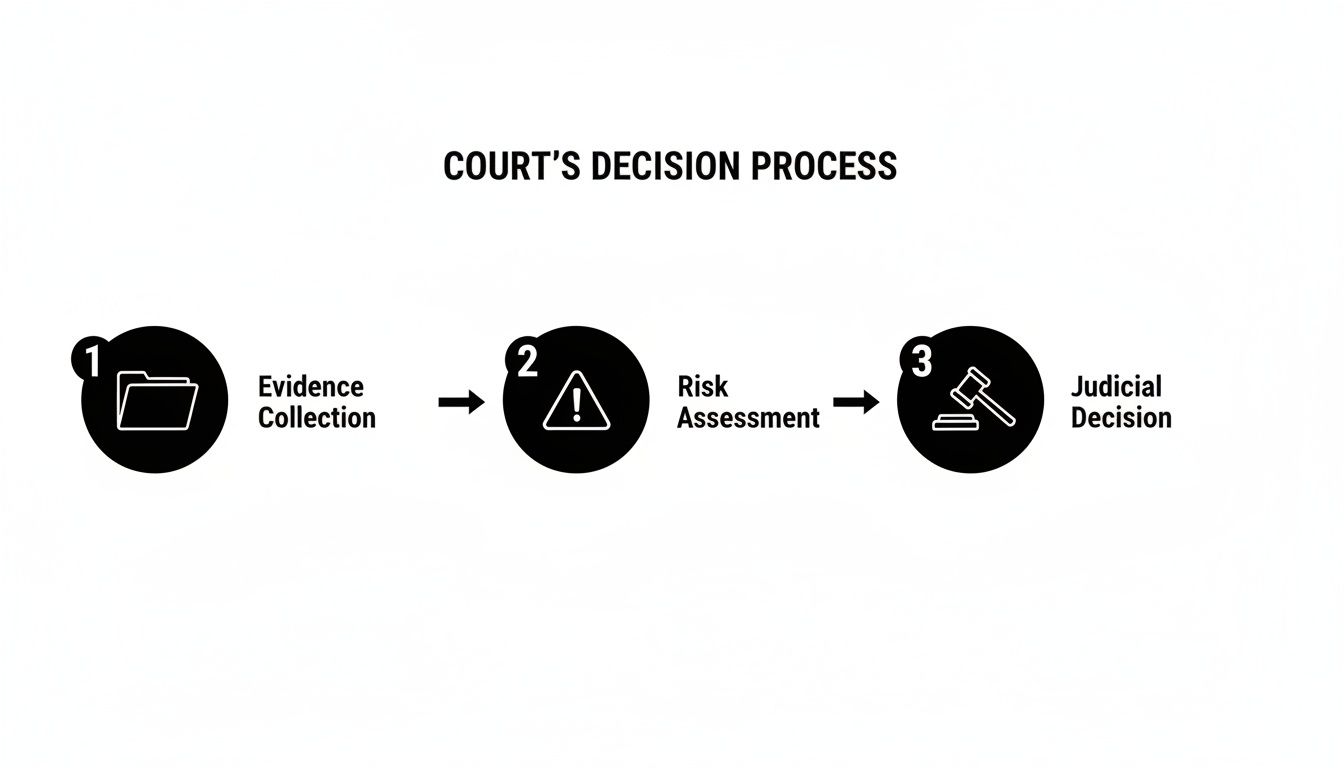
If this legal process is not grounded in solid evidence and proper procedure, an appeal can expose those critical flaws and seek to correct them.
Presenting Your Case to the Court of Appeals
After identifying these errors, the argument is presented to a higher court—the court of appeals. The foundation of this argument is a meticulously researched and written legal document called an appellate brief. This is the cornerstone of the appeal.
- Briefing: In the brief, we methodically present the facts from the record, cite the controlling laws and previous appellate court decisions, and demonstrate how the trial judge’s errors led to an improper ruling that harmed your family.
An appeal provides a second look at your case, not by one person, but by a panel of judges whose sole duty is to review the trial record and ensure the law was followed correctly. The timelines for an appeal are strict and unforgiving, beginning with the Notice of Appeal. You can learn more about this first critical step in our guide on what a Notice of Appeal is.
Trial judges are human and can make mistakes. The appellate process exists to restore fairness and fight for a final judgment that is just, correct, and legally sound.
Examples of Common Reversible Errors in SMC Cases
Winning an appeal requires more than dissatisfaction with the outcome. It is a disciplined legal process that depends on proving the trial judge made a specific, reversible legal error. When a court appoints a parent as a sole managing conservator, these critical mistakes often fall into several common categories.
If you feel the trial court's decision was fundamentally wrong, there is likely a legal reason for it. A skilled appellate attorney analyzes every page of the trial record to identify these errors and build a persuasive case for the court of appeals.
Improper Admission or Exclusion of Evidence
One of the most common grounds for appeal involves how the trial judge handled the evidence. The judge acts as a gatekeeper, and their decisions on what information to consider—and what to exclude—can determine the outcome of a custody dispute.
A reversible error may have occurred if the judge:
- Wrongfully Excluded Key Evidence: For example, the court may have refused to consider your child's positive school records, a favorable report from a counselor, or testimony from a neutral witness who observed your positive interactions with your child. When crucial evidence of your parental fitness is excluded, the court is making a decision based on an incomplete picture.
- Admitted Prejudicial or Irrelevant Evidence: Conversely, the judge may have allowed the other parent to introduce testimony intended only to damage your character without being relevant to your parenting abilities. This could include personal attacks or details from your past designed to create bias.
These evidentiary errors can lead to a ruling based on an incomplete or unfairly skewed set of facts, which is a powerful basis for an appeal.
Misapplication of the "Best Interest" Standard
As stated earlier, every child custody decision in Texas must be based on the child's "best interest." This is a legal standard that requires a careful evaluation of specific factors. A common ground for appeal is that the trial court misapplied this analysis.
- "Abuse of Discretion" is the legal term for when a judge's ruling is arbitrary, unreasonable, or disconnected from the law. In an SMC case, this could occur if a judge fixates on one minor mistake while ignoring years of consistent, loving parenting.
For instance, a judge might appoint a sole managing conservator based on a single argument while overlooking substantial evidence of your stability and deep involvement in your child's life. This is a classic example of an abuse of discretion, which is a core concept you can explore further in our guide to the grounds for appeal in civil cases.
Failure to Comply with Statutory Requirements
The Texas Family Code contains mandatory rules that judges must follow, especially in cases involving allegations of family violence. For example, if a judge finds that a history of family violence exists, the law requires the judge to include specific, written findings about it in the final order.
If the court appoints a parent as sole managing conservator due to family violence but fails to include these required findings in the written order, the entire decision may be legally defective. This is not a minor oversight; it is a failure to follow a critical legal procedure designed to protect families and can be a powerful reason to reverse the ruling on appeal.
Let Our Appellate Attorneys Review Your Case
If you are facing a court order that names the other parent sole managing conservator, you may feel that your options have run out. However, an unjust ruling does not have to be the final word. Your next step is not to re-argue the facts of your case, but to seek a strategic review of the trial through the Texas appellate system.
This is the focused work of our appellate attorneys. We do not simply glance at your case; we conduct a deep analysis of the trial record, transcripts, and evidence. Our goal is to identify the specific, reversible legal errors that provide the grounds to overturn an unfair outcome. We understand the high stakes when your fundamental parental rights are on the line.
A Calm, Strategic Approach to Justice
An emotional and stressful trial requires a legal team that brings calm confidence and sharp strategic focus to the next stage. We work to build a persuasive, meticulously structured argument for the court of appeals, demonstrating precisely how a legal mistake at the trial level led to a flawed and harmful result. Our focus is on ensuring the law was applied correctly and that you received due process.
The deadlines for filing an appeal in Texas are incredibly strict. In most family law cases, you have only 30 days from the date the final order is signed to file your Notice of Appeal. Missing this deadline can permanently close the door on your right to challenge the court's decision.
It is critical to act quickly to preserve your appellate rights. An experienced appellate lawyer can review your case immediately, determine if there are solid grounds for an appeal, and initiate the process before time runs out. We can explain the standard of review, identify potential errors, and map out the steps of the appellate journey. If the judge's decision feels fundamentally wrong, there may be a valid legal reason.
If you believe the court made a mistake in your family law case, our appellate attorneys can help you seek a fair outcome. Contact The Law Office of Bryan Fagan today for a free consultation.
Common Questions About Appealing an SMC Order
After receiving a custody ruling that you believe is unjust, it is normal to have urgent questions. When considering an appeal of a sole managing conservator order, clear answers are the first step toward regaining a sense of control. Here are some of the most common questions our clients ask.
What is the deadline to appeal a sole managing conservator order?
This is the most time-sensitive question. In Texas, you generally have only 30 days from the date the judge signs the final order to file a Notice of Appeal. This deadline is firm. If you miss it, you will likely lose your right to challenge the court's decision. It is essential to consult with an appellate attorney as soon as possible after your trial concludes.
Can I introduce new evidence on appeal?
No. This is a common misconception. An appeal is not a new trial. It is a review of what already happened in the trial court. The court of appeals can only consider the official “record” from your trial, which includes all documents, testimony, and evidence that were presented to the original judge. The purpose of the appeal is to find legal errors within that existing record, not to add new information.
What does "abuse of discretion" mean in plain English?
Abuse of discretion is the legal standard appellate courts use to review many of a trial judge's decisions in a family law case. It does not mean the judge was personally abusive. It is a legal term meaning the judge made a ruling that was arbitrary, unreasonable, or made without reference to guiding legal rules and principles. For example, if a judge ignored overwhelming evidence and based a decision on a single, minor event, or failed to correctly apply the "best interest of the child" factors, that could be an abuse of discretion. Proving this is often the central task in a custody appeal.
How long does a family law appeal take?
The appellate process is methodical and thorough, so it is not a quick fix. The timeline can vary depending on the complexity of the legal issues and the appellate court's docket. It is not unusual for a family law appeal in Texas to take a year or more from the date the notice of appeal is filed to the issuance of a final decision from the court of appeals.
If you believe the trial court made a mistake in your family law case, our appellate attorneys can help you seek a fair outcome. Contact The Law Office of Bryan Fagan, PLLC today for a free consultation.