
When a Texas family court judge issues a final order that you believe is fundamentally unfair, it can feel like the ground has shifted beneath your feet. A decision about your children, property, or future has been made, and you may be left feeling that the system failed to deliver a just result. This is often when individuals begin to look at their legal options, including the possibility of an appeal.
Before we dive into the complexities of the appellate process, it’s important to understand how every step in your case, even the very first one, creates the permanent record that an appellate court will review. A document called a Waiver of Service is a perfect example. While it seems like a simple administrative form, it’s one of the first critical steps in a Texas family law case, and every step matters when you're seeking a fair outcome.

Understanding Your First Steps After an Unfair Ruling
Perhaps you feel the judge completely missed a key piece of evidence during your trial. Or maybe they seemed to misunderstand the law, leading to a ruling that jeopardizes your family’s financial stability or your relationship with your children. That sense of injustice is real, and it's important to know you may not be at a dead end. In Texas, the appeals process provides a pathway to challenge a court's decision and seek a correction.
An appeal is not a second trial; you don't get to present new evidence or re-argue your entire case. Instead, it’s a focused, methodical review of the existing trial record. The goal is to identify specific legal mistakes—known as "reversible errors"—that unfairly influenced the final outcome. Our seasoned Texas appellate attorneys specialize in combing through the record to pinpoint these errors and build a compelling, strategic argument for a different result.
How Early Procedural Steps Lay the Foundation
Think of your case like a building. Every action, from the moment the lawsuit is filed, becomes a brick in its structure. How the case officially began is the foundation. That's why documents like the Waiver of Service are so important—they are the first building blocks of the case file that an appellate court will one day examine under a microscope.
Making sense of every part of this legal journey is the first step toward building a solid strategy. The procedural decisions you make right at the start can have a lasting impact on your rights, and understanding them is key to ensuring the process is fair from beginning to end.
A core principle of our justice system is due process, which guarantees everyone fair notice of a lawsuit and a meaningful opportunity to respond. The way a case starts—whether with formal service or a signed waiver—lays the groundwork for that fairness. A misstep at this initial stage can, in some situations, create a significant issue on appeal.
This guide will break down the Waiver of Service in simple, clear terms. We'll explore how these seemingly minor procedural choices can become pivotal. When you understand your rights and the significance of every document that crosses your path, you are better equipped to protect your family's future, both in the trial court and, if necessary, on appeal.
What is a Waiver of Service in a Texas Lawsuit?
When one person files a lawsuit against another, the law requires that the person being sued is formally notified. This process is called "service of process," and it’s a cornerstone of our legal system. It protects your fundamental right to know you are being sued and to have a fair chance to respond.
Traditionally, this notification involves a constable, sheriff, or a certified private process server physically locating you and handing you a copy of the lawsuit. This in-person delivery creates an official, undeniable record that you have received the necessary papers.

However, there’s a less confrontational and more common way to handle this initial step: the Waiver of Service.
A Waiver of Service is a legal document you can sign to tell the court, "Yes, I have received a copy of the lawsuit, and I agree to waive the requirement of formal delivery by a process server." It is a practical first move in many Texas family law cases, especially when the parties hope to start the process on a more cooperative footing.
Acknowledgment, Not Agreement
This is the most critical point to understand about signing a waiver: it is not an admission of fault or agreement with the lawsuit's claims.
Signing a Waiver of Service does not mean you agree with anything the other party is claiming. It is not a surrender. It is simply a formal acknowledgment of receipt.
Think of it like signing for a certified letter at your doorstep. Your signature only proves you received the package; it says nothing about whether you agree with its contents. The waiver’s primary purpose is to allow the case to move forward efficiently, saving both parties the time, inconvenience, and expense of formal service.
Once you sign and file the waiver, the clock officially starts ticking on your deadline to file a formal "Answer" with the court, which is your official response to the lawsuit.
Formal Service vs. Waiver of Service at a Glance
So, why would you choose one method over the other? Comparing them side-by-side clarifies the strategic differences, whether you're facing a contested divorce or a modification of a child custody order.
| Aspect | Formal Service of Process | Waiver of Service |
|---|---|---|
| Method | A constable or private process server personally delivers the documents to you. | You voluntarily sign a form acknowledging you have received the documents. |
| Cost | The person filing the lawsuit must pay fees for the server's time and effort. | Generally, there is no cost, saving money at the beginning of the case. |
| Control | You have little control over the time or place of service (e.g., at home or work). | You have control over the timing and privacy of receiving the lawsuit papers. |
| Response Deadline | Your deadline to file an Answer is shorter, typically the Monday after 20 days have passed. | You are granted a longer period to file your Answer with the court. |
Ultimately, the waiver is a tool designed to streamline the very first step of a lawsuit. It can set a more collaborative tone and avoid the immediate conflict of being formally "served."
However, because signing a waiver carries legal consequences and starts crucial deadlines, you should never sign one without first speaking with an experienced family law attorney. Getting this first step right ensures the case record is clean from the beginning, which is critical for protecting your rights if an appeal becomes necessary later on.
The Strategic Choice of Signing a Waiver
https://www.youtube.com/embed/A7p1VgWcuoQ
Deciding whether to sign a Waiver of Service is often the first strategic decision you'll make in a lawsuit. It’s more than just paperwork—it’s a choice with practical benefits and potential pitfalls that can set the tone for the entire case.
For the person filing the lawsuit (the Petitioner), offering a waiver is a practical move. It can start the case more quickly by avoiding the time and effort of formal service. It also saves money by eliminating the fees for a constable or private process server. In many ways, it’s an invitation to begin the legal process on a cooperative footing.
For the person being sued (the Respondent), the advantages are often more significant. Signing a waiver allows you to avoid the potential embarrassment of being served papers at your home or workplace. More importantly, under the Texas Rules of Civil Procedure, it gives you more time to file your official Answer with the court. That extra time is invaluable, giving you a chance to consult with an attorney and prepare your response without feeling rushed.
Understanding the Risks and Responsibilities
While a waiver offers convenience, it is a legally binding document that must be treated with care. The moment you sign it, you are officially part of the lawsuit, and a strict deadline to respond begins.
If you miss that deadline, the consequences can be severe. The court can issue a default judgment against you, meaning the other party could be granted everything they asked for in their petition without you ever having a chance to present your side of the story. This significant risk highlights why it is so critical to seek legal advice before you sign.
The decision to sign a waiver isn't just a procedural formality; it’s a strategic choice that can influence the course of your case. Consulting with an attorney first ensures you understand the full implications and make a decision that protects your rights from day one.
The Broader Impact of Waivers
The power of a waiver to alter standard procedures isn't limited to family law—these instruments can have massive consequences in other arenas.
For example, waivers tied to policy changes in international health funding have sometimes led to the suspension of crucial health services. This has disrupted HIV prevention programs for vulnerable communities when clinics were forced to shut down, jeopardizing years of global progress. You can read more about these findings on the UNAIDS website.
This parallel illustrates a vital point: whether it's a global health initiative or a personal property division dispute, a waiver is a powerful legal tool. Your choice to sign creates an official record that follows the life of the case. If the outcome is unfair and you need to appeal, every document—including that initial waiver—will be closely examined. Making a smart, informed decision at the start helps build a solid, defensible record for the future.
How Early Procedural Steps Can Impact an Appeal
If a judge has ruled against you and the outcome feels profoundly wrong, an appeal may be your path to a fair resolution. It is essential to understand what an appeal entails. It is not a new trial or a do-over. Instead, the appellate court places the original trial under a microscope, examining the official record for significant legal mistakes.
Surprisingly, some of the most compelling errors—the kind that can get a judgment overturned—occur at the very beginning of a case.
The Record Begins with Service
Properly notifying someone that they are being sued isn't just a formality; it's a cornerstone of our justice system. This is a key part of your constitutional right to “due process,” which ensures you receive fair warning and a real opportunity to defend yourself. When this first, critical step is handled incorrectly, it can become a powerful basis for an appeal.
Every document filed and every action taken in the trial court becomes part of the official record. Think of it as the case's permanent history, and it is the only thing the appellate court will review. A mistake early on, such as a problem with serving the lawsuit or an issue with a waiver of service, is etched into that record forever.
For instance, if a default judgment was entered against you because you were never properly served with the lawsuit, that is a classic due process violation. Similarly, a flawed Waiver of Service—perhaps one signed under duress, based on fraudulent information, or without a full understanding of its legal impact—can also be challenged on appeal as a reversible error.
A reversible error is a legal mistake so significant that it likely led to an incorrect outcome. An appellate attorney’s primary job is to identify these errors within the trial record.
Waivers as a Legal Tool
The concept of using a waiver to modify rules isn't unique to lawsuits. In U.S. health insurance policy, for example, states can request waivers under the Affordable Care Act to modify major regulations. This allows them to experiment with new ways to manage health insurance to stabilize costs and expand coverage. You can see how these waivers are used to alter complex systems on the CMS website.
This comparison reinforces a key point: a waiver of service is a serious legal document with significant consequences. While it may seem like a simple form to speed things up, it formally changes the required legal process.
Ensuring every step is done correctly, starting with how the lawsuit is delivered, is vital. If you are dealing with an unfair result in a case involving a protective order or a divorce, the initial paperwork can be a source of appealable errors. Protecting your right to appeal means paying close attention to every detail from the very beginning.
Common Reversible Errors in Texas Family Law
If you are reading this, you may feel that your case was decided unfairly. While this feeling is understandable, it's crucial to know that an appeal is not a second chance to argue the facts. You cannot win an appeal simply because you disagree with the judge's decision.
Instead, a successful appeal is built on identifying specific, significant legal mistakes in the trial court record. We call these reversible errors. While an issue with a waiver of service can be one such error, many other types of mistakes can provide a solid foundation for an appeal.
One of the most common grounds for appeal in Texas family law is "abuse of discretion." This legal term doesn't mean the judge was rude or unprofessional. It means the judge made a ruling that was arbitrary, unreasonable, or without a proper basis in the facts or the law. A judge has broad discretion, but that discretion has limits. When a decision is made without following established rules and legal principles, it can be overturned on appeal.
What Does a Reversible Error Look Like in Practice?
To understand what constitutes a reversible error, let’s look at concrete examples of mistakes that could lead to a successful appeal in a family law case:
- Grossly Unfair Property Division: The court awards 80% of the marital estate to your ex-spouse without providing a legally valid reason for such a disproportionate split. The law requires a "just and right" division, not an arbitrary one.
- Ignoring a Child's Best Interest: A judge makes a custody ruling that disregards clear evidence showing one parent’s home environment is unsafe for the child. This is especially true if an emergency custody order in Texas was necessary but was denied without a sound legal reason.
- Improperly Handling Evidence: The judge refuses to consider critical financial documents that prove your spouse was hiding assets. Conversely, they might allow unreliable hearsay testimony that clearly prejudiced the case and led to an unjust outcome.
- Misapplying the Law: The court incorrectly calculates child support because it misinterpreted a section of the Texas Family Code, or it improperly characterizes your separate property as community property subject to division.
- Failing to Explain the Ruling: Your attorney requests that the judge issue "Findings of Fact and Conclusions of Law"—a document explaining the legal reasoning behind the decision—and the judge fails to do so. This is a significant procedural error because it hinders your ability to build an effective appeal.
A reversible error is not just any mistake; it's a mistake that likely caused the trial court to reach the wrong judgment. The appellate court must be convinced that, without the error, the outcome of your case would probably have been different.
Identifying these errors requires a meticulous review of the entire case record—every word of testimony, every exhibit, and every motion. A skilled appellate attorney has a trained eye for this work, knowing how to connect a seemingly small procedural slip-up to a major, outcome-changing error. This deep, strategic analysis is the foundation of a strong appeal and is how we work to secure the fair and just result our clients deserve.
Navigating the Texas Appellate Process
If you believe a judge made a serious, outcome-determinative mistake in your case—what the law calls a "reversible error"—you must act quickly. The clock on a Texas appeal starts ticking the moment the trial judge signs the final judgment, and the deadlines are strict and unforgiving.
Understanding the major steps can make this complex process feel more manageable. It's important to remember that an appeal is not a new trial. It is a careful, methodical process of reviewing the existing case record to identify legal errors that led to an unjust outcome.
The First Critical Steps
The appellate journey begins with filing a Notice of Appeal. This is a straightforward but essential document that informs the trial court and the other party that you are formally challenging the decision. You typically have only 30 days from the date the judgment was signed to file this notice. Missing this deadline can permanently forfeit your right to appeal.
Immediately after filing the notice, your attorney will order the official records from the trial. This is your evidence on appeal, and it comes in two parts:
- The Clerk's Record: This is the complete paper trail of your case. It includes every document filed, from the initial petition and waiver of service to motions, evidence, and the final order.
- The Reporter's Record: This is the official transcript—a word-for-word account of everything said in court during hearings and the trial.
Together, these records form the complete, unchangeable story of your case. The court of appeals will not consider anything outside of this official record.
Crafting the Appellate Argument
Once the records are obtained, the real work begins. This is the briefing stage. During this phase, your appellate lawyer transforms from an investigator into an advocate, weaving together the facts from the record and relevant law into a persuasive written argument called an appellate brief.
This document is the cornerstone of your appeal. It is where we present your case to the appellate court, pointing to specific places in the record where errors occurred and using legal precedent to demonstrate why the trial court's decision was legally incorrect. It is a detailed, highly technical process that requires a specialized understanding of appellate rules and strategic advocacy. To see how these timelines can play out, check out our guide on how long it takes to process a divorce.
This graphic illustrates how an unfair ruling is transformed into a formal appeal.
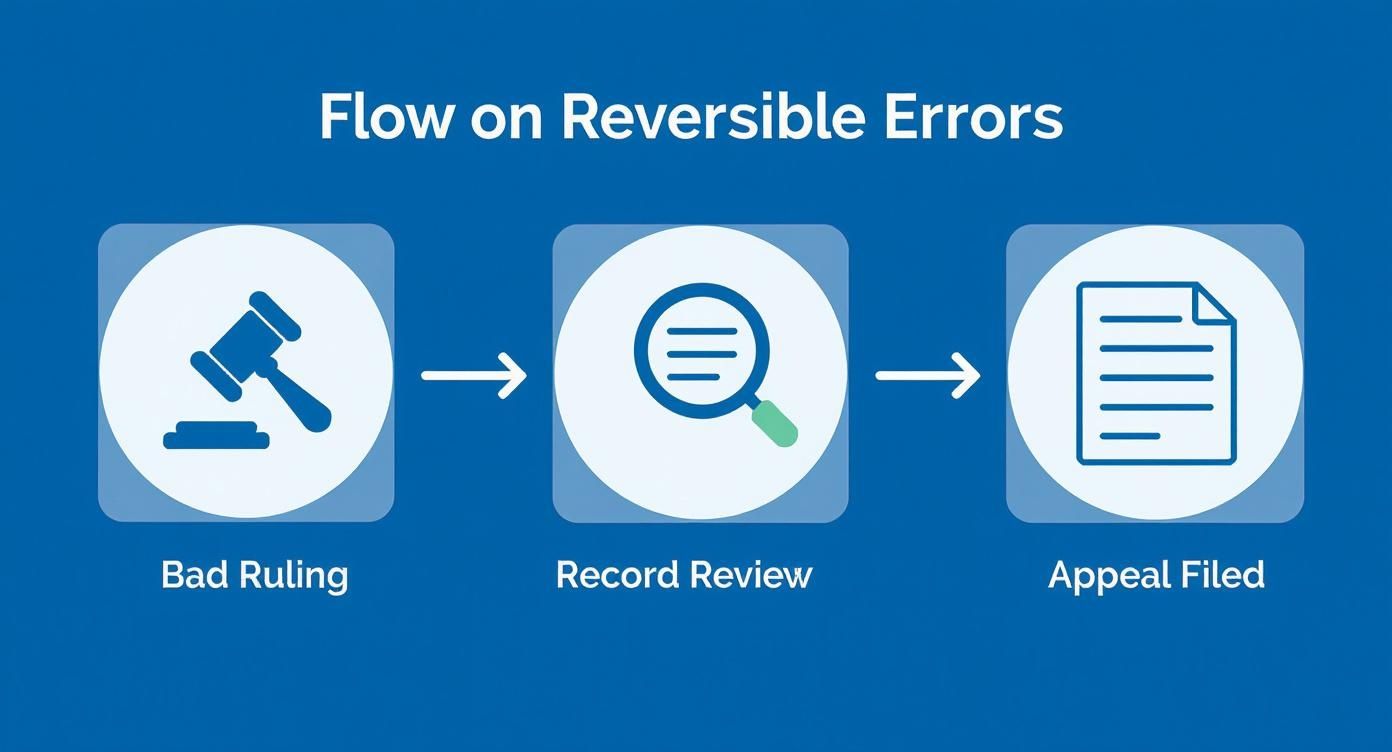
As you can see, an appeal is not an emotional reaction to a loss. It is a structured, strategic process designed to correct legal mistakes and restore fairness.
Frequently Asked Questions About Texas Appeals
When a family law case concludes with an outcome that feels fundamentally unfair, it's natural to have many questions. If you are questioning the court's decision, you are likely wondering what comes next. Let's address some common questions about the Texas appeals process, starting with an early step that often causes confusion: the waiver of service.
Can I Still Appeal My Case If I Signed a Waiver of Service?
Yes, absolutely. Signing a waiver of service at the beginning of your case does not affect your right to appeal a final judgment.
The waiver is simply a procedural tool. It is a formal way of telling the court, "I have received the lawsuit papers," which saves the time and expense of having a constable or process server deliver them to you in person. Your right to appeal depends on whether you can demonstrate that the trial court made a significant legal mistake—a "reversible error"—and whether you file your Notice of Appeal on time. How the case was initiated does not impact your right to seek justice through an appeal.
What Happens If the Other Party Is Avoiding Service?
A lawsuit does not stop simply because one party is trying to avoid being served. Texas law provides clear procedures for this situation. If someone is actively evading service, an attorney can file a motion asking the court for permission to use "substituted service."
This allows for alternative methods of providing notice, such as:
- Leaving the documents with any person over 16 years of age at a specified location.
- Sending the papers via certified mail.
- In some circumstances, a judge may even authorize notice through email or social media.
The legal system is designed to prevent a case from being stalled because one person refuses to participate.
Is a Waiver of Service the Same as Agreeing to the Lawsuit?
No, and this is a critical distinction. Signing a waiver of service does not mean you are admitting fault or agreeing with any of the claims made in the lawsuit. It is purely a procedural step confirming your receipt of the paperwork.
Think of it like signing for a certified letter. Your signature proves you received the package; it says nothing about whether you agree with its contents.
You only "agree" to the terms of a lawsuit if you sign a formal settlement agreement or a consent decree. The waiver itself is simply your acknowledgment of the legal process. By signing it and then filing a formal Answer, you are protecting yourself from a default judgment, which can occur if you ignore the suit entirely.
If you believe the court made a mistake in your family law case, our appellate attorneys can help you seek a fair outcome. Contact The Law Office of Bryan Fagan today for a free consultation at our dedicated appellate law website.