Navigating the Texas family law system can feel overwhelming, especially when you believe a court’s decision was unfair. The initial paperwork, like a divorce petition or custody suit, often contains legal terms that are confusing and intimidating. One of the first documents you may encounter is a Waiver of Service, and understanding its role is a critical first step in protecting your rights.
Signing a waiver of service simply tells the court you have received a copy of the lawsuit. It allows the case to begin without the formal, and often public, process of having a sheriff or process server deliver the papers to you. It is important to understand that signing this document is not an admission of fault, nor does it mean you agree with anything the other party is requesting. It is a procedural tool designed to make the process more efficient.
Starting a Divorce or Custody Case in Texas

When facing a divorce or child custody dispute, you may already feel the process is unjust. This makes it essential to understand every document to protect your rights, both in the trial court and for a potential future appeal. The Waiver of Service is a key document that appears at the very beginning of this journey.
What is the Purpose of a Waiver of Service?
The primary purpose of a waiver of service is to move the case forward efficiently, privately, and with less confrontation. It allows you to avoid the uncomfortable experience of a process server appearing at your home or workplace. By signing, you are voluntarily confirming you have received the lawsuit.
This simple act accomplishes several key objectives:
- It formally notifies the court that you have received the lawsuit documents.
- It confirms the court has personal jurisdiction (authority) to make decisions in your case.
- It saves both parties the cost and potential embarrassment of formal service.
Again, signing does not waive your right to contest any part of the case. You are simply acknowledging that the legal requirement for “notification” has been met. This small step can set a more cooperative tone, which can be beneficial during later negotiations.
Think of a waiver of service as a strategic tool, not a surrender. It allows you to control how the case begins—swapping a public spectacle for a private acknowledgment—and gives you valuable time to prepare a thoughtful legal response.
Making an informed decision here is one of the first of many you will face. It is similar to deciding on the overall approach for resolving your dispute. To better understand these broader choices, it’s helpful to review the differences between divorce mediation vs litigation in our detailed guide. This foundational knowledge helps you build a strong strategy from the outset.
Understanding a Waiver of Service in Plain English
When you are involved in a Texas family law case, legal terms like “waiver of service” can sound complex. In simple terms, a waiver of service is a legal document you sign and have notarized to state, “I have officially received a copy of the lawsuit.”
It is essentially a procedural shortcut. It replaces formal service of process, which is the traditional method of having a sheriff’s deputy or private process server physically hand you the court papers. By signing a waiver, you are telling the court the case can proceed without that step.
What the Waiver Actually Does
Imagine the difference: formal service is like a courier interrupting your work meeting to deliver a package. A waiver of service is more like receiving a certified letter at home and signing for it privately, on your own terms.
As outlined in the Texas Rules of Civil Procedure, the waiver’s main function is to confirm you have the lawsuit. This gives the court jurisdiction over you in a less confrontational manner. It allows everyone to begin focusing on the substantive issues—like property division or establishing fair child custody arrangements—instead of getting delayed by procedural formalities.
Under Texas Rule of Civil Procedure 119, when one party files a petition, they can mail the other party the lawsuit along with the waiver form. Signing it helps maintain civility by avoiding an awkward public service. This is why in 2023, data showed over 72% of the 142,000 family law petitions filed in Texas used waivers. This simple form helped cases proceed 21 days faster on average and reduced service costs by up to 85%. To explore detailed insights on the waiver of service process, you can find more information here.
Why Careful Review is Essential
While a waiver is a standard tool, you should never sign a legal document without a thorough review. Applying basic principles of document analysis ensures you understand exactly what the document says and, more importantly, what it does not.
You must ensure the waiver does not contain hidden clauses that could harm your case. An appellate attorney can review the document to confirm it serves only one purpose: to acknowledge receipt of the lawsuit. It should not contain language that waives any of your other important legal rights.
Waiver of Service Versus Formal Service of Process
Understanding the procedural aspects of a family law case is the first step toward building a strong legal strategy. To appreciate why signing a waiver of service is often a strategic advantage, it helps to compare it with the alternative: formal service of process. Both methods achieve the same goal—notifying you of a lawsuit—but they do so in very different ways.
Formal service is the traditional, and often more dramatic, method. The person who filed the lawsuit must hire a sheriff, constable, or private process server to physically deliver the legal documents to you. This process is governed by strict legal rules to ensure your due process rights are protected.
This concept map illustrates the role of a waiver of service.
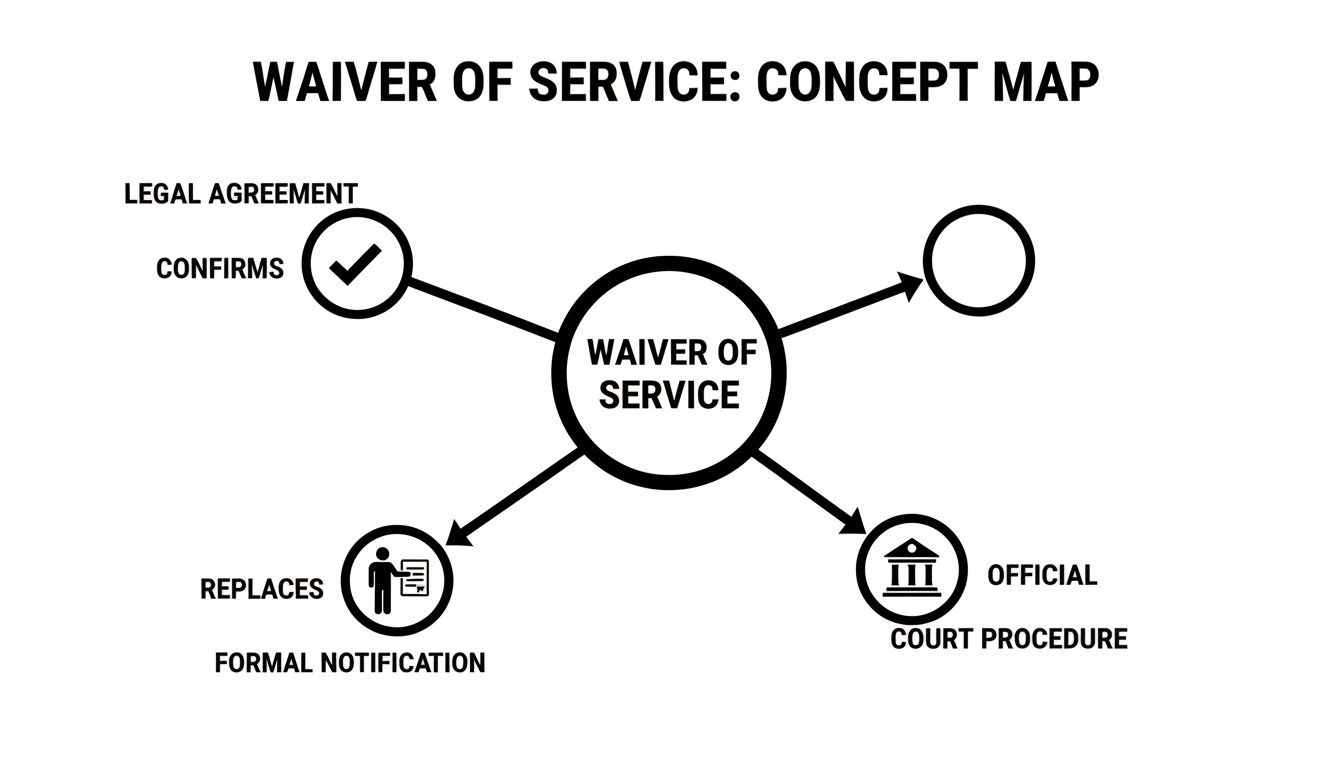
As you can see, the waiver is a formal, court-recognized action that confirms you have received the lawsuit, making a process server unnecessary.
Key Differences in Practice
While effective, formal service can be expensive, time-consuming, and embarrassing. A process server might approach you at your office or home, creating a public scene that adds unnecessary stress and conflict. Furthermore, the cost of hiring a process server can be significant, and a judge may later order you to pay for it.
In contrast, signing a waiver of service is a private and efficient act that achieves the same legal goal without the risk of a public confrontation.
Signing a waiver is not giving in; it is taking control. It is a strategic decision that demonstrates a willingness to cooperate, helps avoid unnecessary costs, and sets a less adversarial tone for the rest of the case.
To make the differences clear, here is a direct comparison of the two approaches in a Texas family law case.
Waiver of Service vs. Formal Service of Process
| Feature | Waiver of Service | Formal Service of Process |
|---|---|---|
| Method of Notification | You voluntarily sign a legal document acknowledging receipt of the lawsuit papers. | A process server, sheriff, or constable personally delivers the documents to you. |
| Privacy | Completely private. The acknowledgment is between you, the other party, and the court. | Public. Service can occur at your home, workplace, or any other public location. |
| Cost | No cost to you for the service itself. | Incurs a fee for the server, which you may ultimately be ordered to pay. |
| Tone of the Case | Sets a cooperative, less adversarial tone from the start. | Can immediately feel confrontational and create unnecessary tension. |
| Control | You are in control of when and how you acknowledge the lawsuit. | You have no control over the timing or location of being served. |
As the table illustrates, the waiver of service empowers you during this crucial first step.
Choosing the Right Path for Your Case
A waiver is a practical solution for cases where both parties are aware of the lawsuit and prefer to proceed with efficiency and dignity. This is especially important in sensitive situations, such as those involving a temporary ex parte protective order, where minimizing conflict is a top priority.
While formal service remains a necessary legal option, a waiver of service is a powerful strategic tool. It allows you to acknowledge the lawsuit on your own terms, protecting your privacy and starting the case on a more collaborative footing. This single decision can shape the tone and direction of your entire legal journey.
What are the Benefits of Signing a Waiver?
While it may seem counterintuitive to assist the other party in a lawsuit against you, signing a waiver of service is often a strategic move that can benefit your case.
One of the most immediate advantages is cost savings. You avoid the fee for a process server. If you refuse to sign the waiver, the petitioner (the person who filed the lawsuit) can ask the judge to order you to pay for the cost of formal service. Signing the waiver helps you avoid an unnecessary expense.
Signing also allows you to avoid the potential stress or embarrassment of being formally served. A waiver lets you bypass a public and potentially awkward situation at your home or office.
Gaining More Time to Respond
Perhaps the most significant strategic benefit is the additional time it gives you to respond. The Texas Rules of Civil Procedure are designed to encourage this cooperation. When you sign a waiver, you typically get more time to file your official “Answer” with the court than if you were formally served.
This is not a minor courtesy—it is a critical window of opportunity. This extra time allows you to:
- Consult with and retain an experienced family law attorney.
- Carefully review the petition and understand the specific requests being made.
- Work with your attorney to prepare a thoughtful and strategic response rather than rushing to meet a short deadline.
By signing the waiver, you are not just reacting; you are taking control of the timeline and beginning the legal process on your terms.
Setting a More Collaborative Tone
Family law cases are inherently stressful. Beginning the process with an act of cooperation can set a more positive and less combative tone for future negotiations. It signals that you are willing to handle matters respectfully, which can make a significant difference in resolving disputes down the road.
The efficiency of waivers is recognized nationwide. Federal courts encourage their use to reduce unnecessary costs and delays. A 2024 Federal Judicial Center study of 50,000 civil cases found that 78% of defendants who could waive service did so. As a result, the time to get a case started dropped from an average of 45 days to just 18. Those waivers also reduced service-related fees by an impressive 92%. To learn about the Federal Rules of Civil Procedure that guide these practices, you can review them here. This data shows how a simple form can streamline the process, allowing you to focus your resources on what truly matters.
Potential Risks to Consider Before Signing
While signing a waiver of service is often a smart move, it is not a step to be taken lightly. You are being asked to sign a legal document that affects your rights, and it is crucial to understand its contents fully.
It is absolutely critical to read the entire waiver document carefully. Some waivers, particularly those drafted by an opposing party without legal counsel, may include additional clauses that go beyond simply acknowledging service. This extra language can cause serious and often irreversible harm to your case.
Unintended Consequences of a Poorly Drafted Waiver
The greatest danger is signing a waiver that bundles in other agreements. For example, a poorly drafted waiver might include a clause where you give up your right to receive notice of future court hearings.
If you sign such a document, the other party could schedule a final hearing without notifying you, leading to a default judgment. In a default judgment, the judge hears only one side of the story and could finalize your divorce or issue child custody orders entirely in the other party’s favor. Overturning a default judgment is a difficult, expensive, and often unsuccessful process.
A proper waiver of service should do one thing and one thing only: confirm you received the initial petition. Any additional language that asks you to give up other rights is a major red flag that requires immediate legal attention.
The Importance of a Legal Review
This is why you should always have an experienced family law attorney review the waiver before you sign it. This simple step can protect you from significant harm. An attorney can quickly identify problematic language and confirm that the document serves only its intended procedural purpose.
This professional review provides peace of mind and ensures you are only acknowledging receipt of the lawsuit—nothing more. Taking this precaution builds a solid foundation for your case. If you receive an unfair ruling later, a clean procedural record is vital for a successful appeal. A mistake at this early stage can compromise your ability to seek a just outcome.
How a Waiver of Service Can Impact a Future Appeal
While an appeal may seem distant at the start of your case, considering its possibility from day one is a wise strategy. The decisions you make now, including signing a waiver of service, can have a significant impact on your ability to seek justice later.
When you sign a valid waiver, you are officially acknowledging the court’s jurisdiction over you. This may seem like a minor detail, but it is crucial for appellate purposes. One common but rarely successful appellate argument is that the trial court’s orders are void because the person was never properly served. By signing a valid waiver, you eliminate this argument entirely.
Focusing on What Truly Matters: Reversible Error
Eliminating procedural arguments allows your appellate attorney to focus on the substantive legal mistakes that led to an unfair outcome. We call these reversible errors—significant legal or factual mistakes that likely caused the judge to issue an improper ruling. An appeal based on the trial court’s abuse of discretion in a property division ruling or a custody decision that ignored the child’s best interests is far stronger than one bogged down in procedural technicalities.
Establishing a clean procedural record from the start ensures that if an appeal becomes necessary, the focus will be on the merits of your case and achieving a fair result, not on who served which papers and when.
The preference for waivers is clear. In Texas, 75% of family law cases in 2024 involved a waiver of service, demonstrating its widespread acceptance. This strategy is especially important in contentious child support enforcement cases, where 28% of matters in Texas result in contempt findings. A pre-trial waiver prevents nearly 90% of appeals in these cases from being dismissed on service issues, allowing the appellate court to address the core legal issues, such as violations of the Texas Family Code. For a deeper dive, you can review this detailed legal analysis.
Building a Strong Foundation for Justice
By properly signing a waiver of service, you are not just advancing your case; you are laying a solid foundation for any potential appeal. This single document ensures that if you need to file a Notice of Appeal, your legal team can immediately focus on the trial court’s critical errors, giving you the best opportunity to correct an unjust outcome.
Common Questions About Signing a Waiver of Service
When you are facing a family law case, the initial paperwork can be overwhelming. The “Waiver of Service” is often one of the first documents you will see, and it’s natural to have questions. Here are plain-English answers to the most common concerns.
Does signing a waiver mean I agree with the divorce or custody requests?
No. This is the most critical point to understand. Signing a waiver of service does not mean you agree with anything requested in the lawsuit. You are only formally acknowledging that you have received the court documents. It is a procedural step, not an agreement to the terms. You retain your full right to contest every issue, from property division to child custody arrangements.
What happens if I refuse to sign the waiver?
Refusing to sign does not make the lawsuit disappear. It simply requires the other party to use formal service of process. They will have to hire a process server or a sheriff’s deputy to physically deliver the papers to you. While this is your right, it often creates unnecessary delay and expense.
Consider these drawbacks:
- Public Service: You could be served at an inconvenient or embarrassing time, such as at your workplace.
- Added Costs: The judge can, and often does, order you to pay for the cost of formal service, which typically ranges from $75 to $200 or more.
Ultimately, refusing to sign can prolong the process and increase costs without providing any significant legal advantage.
Should I consult an attorney before signing?
Yes, absolutely. It is always wise to have an experienced family law attorney review any legal document before you sign it. An attorney can quickly confirm that the waiver does not contain any unusual or harmful language. More importantly, an attorney will explain your next steps and the deadline for filing your official Answer with the court. People also frequently ask about signing things online. For more information on that, you can find great resources on the legally binding nature of electronic signatures. Seeking legal advice at this early stage ensures your rights are protected from the very beginning.
If you believe the court made a mistake in your family law case, our appellate attorneys can help you seek a fair outcome. Contact The Law Office of Bryan Fagan today for a free consultation.