You may feel your case was handled unfairly if a court failed to recognize the damage being done to your relationship with your child. When a judge’s ruling ignores parental alienation or orders ineffective parental alienation treatment, it can feel like the system has failed your family. This isn't just a disagreement over the outcome; it's a profound sense of injustice, especially when you believe the court did not follow Texas law or consider the evidence you presented.
This experience is deeply frustrating, but it is not the end of the road. The Texas appellate process was designed specifically for situations like this—to provide a pathway for correcting significant legal errors made by a trial court. An appeal offers a structured opportunity to have a higher court review the judge’s decision and determine if it was fundamentally flawed, providing a chance to restore balance and seek a fair outcome for you and your child.
What You Can Appeal in a Parental Alienation Case

It’s a gut-wrenching feeling when you realize the other parent is actively trying to turn your child against you. This goes far beyond normal co-parenting disagreements. Parental alienation is a deliberate, destructive pattern, and the emotional toll it takes on both you and your child is immense. If you feel the family court system didn't see what was really happening, you are not alone.
While Texas courts acknowledge that parental alienation is a real and damaging issue that threatens a child's best interests, trial judges do not always get it right. Sometimes, a judge might misunderstand the evidence, miss the subtle but clear signs of manipulation, or issue orders that fail to fix the underlying problem. That’s precisely why the appellate process exists. An appeal allows a higher court to review the case for reversible errors that may have led to an unjust result.
Understanding the Legal Landscape of Alienation
Parental alienation is a dynamic where a child becomes estranged from a loving parent due to the other parent's psychological manipulation. Research indicates that this affects a significant number of families, and the legal system is increasingly recognizing the severity of the problem. You can learn more about the profound mental health impacts from global research.
This growing awareness is a huge step forward, but it doesn't guarantee a fair outcome in your initial trial. If the court issues an order that sidesteps effective parental alienation treatment, the emotional damage is allowed to fester, and the wedge between you and your child only grows deeper. This is often where an appeal becomes necessary.
An appeal isn’t a do-over of your trial. You cannot present new evidence or re-argue the entire case. It is a focused legal review where an appellate court examines the trial record to determine if the judge made a significant legal mistake.
Common Reversible Errors in Texas Family Courts
If a trial court's decision feels deeply unjust, a well-executed appeal can be the lifeline your family needs. The purpose of an appeal in these situations is to identify a reversible error—a mistake by the trial judge so significant that it likely changed the outcome of your case.
In a parental alienation case, common examples of reversible errors include the judge:
- Ignoring credible evidence that proved alienation was occurring.
- Incorrectly applying the Texas Family Code when making decisions about child custody or visitation.
- Refusing to order necessary therapeutic intervention to protect your child.
- Creating a treatment plan so vague or weak that it was unenforceable.
When a court's mistake compromises the final decision and infringes on your parental rights, an appeal is the proper path forward. It’s about holding the system accountable, ensuring due process was followed, and fighting for a just resolution that can restore your family.
How Texas Courts Identify Parental Alienation
https://www.youtube.com/embed/hdXdwnPqWqg
If you walked out of a courtroom feeling like your pleas about parental alienation fell on deaf ears, you are not alone. It is one of the most difficult dynamics to prove in family law. While Texas courts are required to prioritize a child's best interests, demonstrating that the other parent is running a subtle, manipulative campaign to destroy your relationship with your child is a monumental task.
It requires more than a feeling; it requires clear, compelling evidence that shows a destructive pattern. Judges are trained to look past the normal disagreements of a divorce and identify a systematic effort to undermine a parent-child bond. When a judge fails to see this pattern, even with strong evidence presented, it feels like the system has failed you. This is precisely where an appeal comes in. An appeal is a focused review to determine if the trial court made a serious legal error, such as ignoring the very evidence the law required it to consider.
The Evidence That Matters in Court
To convince a Texas judge that alienation is happening, you must show a documented pattern of behavior. A single text message might be dismissed as frustration, but dozens of them, combined with emails, missed calls, and therapist reports, can create an undeniable picture of manipulation.
Judges look for several key red flags:
- Systematic Interference: One parent constantly obstructs court-ordered visitation with flimsy or last-minute excuses.
- Poisoning the Child's Mind: The alienating parent relentlessly bad-mouths the targeted parent to the child, often sharing false or inappropriate information.
- Erasing the Other Parent: This parent makes a conscious effort to remove all traces of you from the child’s life—hiding pictures, getting rid of gifts, and forbidding any mention of your name.
- Manufacturing Fear: This is the act of making a child feel they must pick a side, often by creating an unfounded fear of the targeted parent.
This kind of toxic dynamic can completely upend custody arrangements. If you want to understand more about how these issues affect possession schedules, you can learn about the complexities of joint custody in Texas and what it takes to protect your rights.
Signs of Alienation That Can Form the Basis of an Appeal
The key is presenting the court with a clear, organized picture of the alienation. The table below breaks down specific behaviors judges look for and the kind of evidence that substantiates these claims. If a trial judge was shown this type of proof but failed to act, it could be what lawyers call a reversible error—the basis for a successful appeal.
| Alienating Behavior | Description | Potential Evidence for Court |
|---|---|---|
| Denigrating the Other Parent | Constantly criticizing, mocking, or making false accusations about the targeted parent in front of the child. | Texts, emails, social media posts, or witness testimony from teachers or counselors who heard the remarks. |
| Limiting Communication | Blocking phone calls, texts, or video chats between the child and the targeted parent. | Phone records showing unanswered calls, documented instances of the child being "unavailable," witness testimony. |
| Creating Loyalty Conflicts | Forcing the child to choose between parents or making them feel guilty for loving the targeted parent. | Testimony from a child psychologist or therapist; documented changes in the child's behavior and statements. |
| False Abuse Allegations | Making baseless claims of abuse or neglect to authorities, forcing investigations that ultimately find no wrongdoing. | Official reports from Child Protective Services (CPS) or law enforcement that clear the targeted parent. |
When you present a solid case and the court still gets it wrong, the legal reasoning must be examined. A judge's failure to connect these dots isn't just a simple disagreement; it can rise to the level of an abuse of discretion.
A judge’s failure to connect these dots and take protective action isn't just a disagreement over the facts—it can be an abuse of discretion. This legal term means the court’s decision was so arbitrary and unreasonable that it violated the rules of law and fairness. Identifying this type of error is the foundation of a strong family law appeal.
Exploring Court-Ordered Treatment and Therapy

When a Texas court confirms that parental alienation has fractured a family, the focus shifts to healing. The goal is to mend the broken parent-child relationship and steer the family toward a healthier dynamic, with the child’s well-being at the center of every decision. This is where court-ordered parental alienation treatment comes into play.
These interventions are not punishments but therapeutic tools designed to fix the specific dysfunction that alienation has created. A judge has several options, from intensive, child-focused therapies to educational programs for the parents. The path chosen depends on the severity of the alienation and what the family needs to recover. However, the effectiveness of any treatment plan depends on its design and execution. A vague court order or an unqualified therapist can do more harm than good, and that kind of misstep can become the foundation for a successful appeal.
Common Therapeutic Interventions in Alienation Cases
While no two cases are identical, Texas family courts tend to rely on a few core therapeutic approaches to address alienation. Each plays a unique role.
-
Reunification Therapy: This is the most targeted and often most critical form of parental alienation treatment. It's a specialized type of family therapy aimed squarely at rebuilding the bond between the child and the targeted parent. A skilled therapist creates a safe space for the child to work through negative programming and learn to communicate again.
-
Family Counseling: This approach brings in more family members, including the alienating parent, to address the entire family system where the alienation grew. It’s about improving communication and reducing the conflict that fuels the problem.
-
Co-Parenting Counseling or Classes: This intervention focuses on the parents. It is designed to teach them how to communicate respectfully and function as a team for their child's sake. The goal is to stop future conflict and shut down alienating behaviors.
The stakes for getting this right are incredibly high. The damage from alienating behavior can cast a long shadow over a child's entire life. An international study of adults who experienced alienation as children revealed devastating long-term consequences, including high rates of depression and anxiety. Many found themselves alienated from their own children later in life, proving this trauma can tragically echo through generations.
When Court-Ordered Treatment Becomes a Reversible Error
When you appeal a case, you're not arguing about whether the therapy "worked." The appeal looks at something more fundamental: Was the judge’s order for treatment legally sound from the start? A trial court makes a reversible error when it issues an order for therapy that is flawed, unworkable, or legally improper.
Abuse of Discretion (Plain English Definition): A legal term for when a judge makes a decision that is arbitrary, unreasonable, or without reference to guiding legal principles. An abuse of discretion can occur when a court's order for parental alienation treatment is so vague or improperly designed that it fails to protect the child's best interests.
So, what does this look like in the real world? An appellate court might find an abuse of discretion if the trial judge did something like:
- Appointed an Unqualified Professional: Ordered the family to see a counselor with no specific training in the complex dynamics of parental alienation.
- Created a Vague or Unenforceable Order: Wrote an order lacking clear goals, timelines, or concrete steps, making it impossible to implement or enforce.
- Failed to Include Necessary Safeguards: Did not include protections to stop the alienating parent from sabotaging the process, such as a clear directive to stop disparaging the targeted parent.
If you believe the court’s orders for therapy were fundamentally broken and did not offer a genuine path to healing, this could be a powerful cornerstone for your appeal.
Understanding the Standard of Review in Alienation Appeals
When a judge gets it wrong in a parental alienation case, it can feel like the entire system has let you and your child down. An appeal isn't a second trial where you can introduce new evidence. Instead, it is a highly specific and technical review of the trial court record. The mission is to find a reversible error—a legal mistake so significant that it very likely caused the judge to reach the wrong conclusion. Grasping what counts as a reversible error is the critical first step in fighting an unjust ruling.
The "Abuse of Discretion" Standard
In most Texas family law appeals, the case hinges on proving the trial judge committed an abuse of discretion. This legal term is the "standard of review" the appellate court uses, and it’s a much higher bar than simply disagreeing with the outcome.
A judge abuses their discretion when they make a decision that is either:
- Arbitrary or unreasonable. The ruling has no logical connection to the facts presented.
- Made without reference to guiding rules and principles. The judge essentially ignored the Texas Family Code or established legal precedents.
Think of it this way: a football referee must make judgment calls. But if they award a touchdown for a field goal, they’ve abandoned the rulebook. In family court, the "rulebook" is the law, and a judge cannot ignore it. An appellate attorney meticulously combs through the trial record to find where the judge strayed from that rulebook.
Common Reversible Errors an Appellate Court Looks For
An appellate attorney carefully reviews every page of the trial transcript, every exhibit, and every order to hunt for legal mistakes the judge made with the information they already had. Here are a few real-world examples of errors that could rise to the level of abuse of discretion in an alienation case:
- Ignoring Overwhelming Evidence: You provided a mountain of credible evidence—emails, texts, and testimony from a psychologist—but the judge’s final order barely acknowledges it.
- Misapplying the Texas Family Code: The judge made a custody decision that contradicts what the Texas Family Code defines as being in a child’s best interest.
- Issuing a Flawed Treatment Order: The court’s order for parental alienation treatment was completely ineffective. For example, the judge appointed a therapist with no qualifications in alienation, or the plan was too vague to enforce.
- Excluding Critical Testimony: The judge wrongly refused to allow a qualified child psychologist to testify about the dynamics of alienation, depriving the court of crucial expert insight.
A reversible error isn't a minor slip-up. It's a fundamental breakdown in the legal process that almost certainly led to an unjust outcome. The appellate court's job is to review the record for these specific flaws and decide if they're serious enough to warrant sending the case back for a new hearing.
A successful appeal can get the trial court’s decision reversed and the case sent back to be reheard—this time, with the correct legal standards applied. The journey starts with a deep dive into your case to see if these kinds of errors are present. You can explore our detailed guide on the grounds for a family law appeal in Texas to get a clearer picture of how appellate attorneys spot and argue these critical issues.
Navigating the Texas Family Law Appeal Process
When the trial court issues a ruling in your parental alienation case that you are convinced is fundamentally wrong, the next step is a formal appeal. This process is less like a do-over and more like a meticulous audit of the trial judge's decisions, guided by the strict Texas Rules of Appellate Procedure. The goal is to find and correct legal errors that led to an unjust outcome for your family.
The entire journey begins with one critical document: the Notice of Appeal. This is the official starting gun, informing the court and the other party that you are challenging the final judgment. You must act fast. In most Texas family law cases, you have a tight 30-day window from the day the final order is signed to file this notice. Missing that deadline can permanently bar you from appealing, no matter how strong your case is.
Step-by-Step Insights: From Trial Record to Appellate Brief
Once the notice is filed, the work shifts to gathering the official appellate record. This record is the entire universe of information the appeals court will consider. It is crucial to understand that you cannot add new evidence or testimony at this stage. The court is only looking at what was presented to the judge at trial.
This record comes in two distinct parts:
- The Clerk’s Record: The complete paper trail of your case—every petition, motion, and the final orders signed by the judge.
- The Reporter’s Record: The official, word-for-word transcript of everything said in court during hearings and the trial.
Our appellate attorneys comb through every page of this record to find reversible errors. This methodical, detail-oriented work is where a skilled family law appeal attorney lays the groundwork for a winning argument.
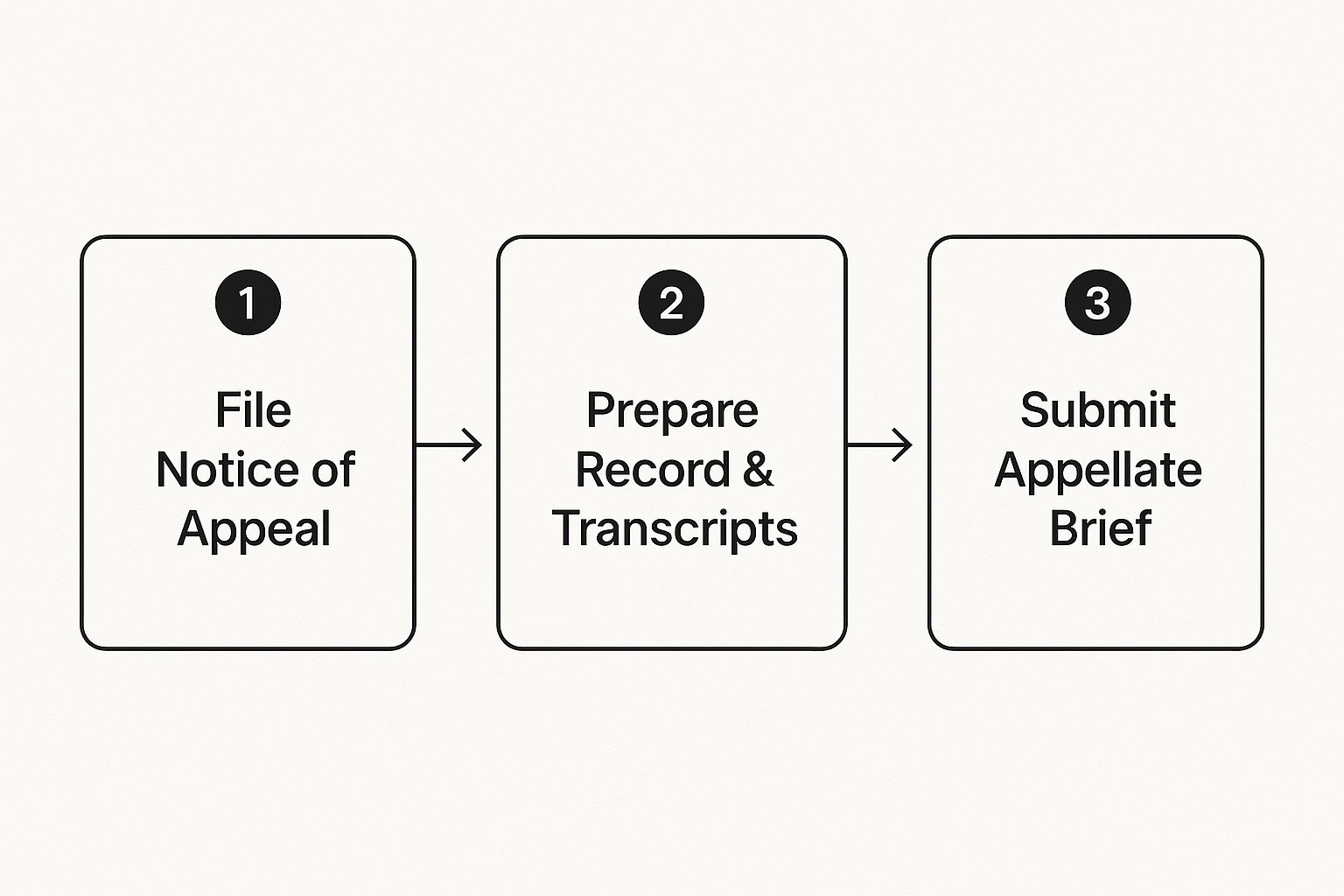
As you can see, it’s a disciplined process that moves from one distinct stage to the next, demanding precision at every step.
Crafting the Persuasive Appellate Brief
The centerpiece of any appeal is the appellate brief. This is a comprehensive, meticulously written legal argument that our team builds for the appellate judges. In its pages, we explain exactly where, how, and why the trial court went wrong. The process of writing and filing these documents is called briefing.
The brief systematically lays out the facts from the record, cites the relevant laws and previous court decisions, and weaves them together to prove a reversible error occurred. This is where we show that the trial judge's decision was an abuse of discretion—for example, by ignoring clear evidence of alienation or issuing a treatment order that was legally flawed. The precision of the appellate brief is absolutely critical, as it must anchor every point in Texas law to demonstrate exactly how the trial court strayed from the proper legal path.
Common Questions About Alienation and Appeals

If you're feeling lost in the maze of legal jargon and court procedures surrounding parental alienation, you are not alone. When your relationship with your child is hanging in the balance, you need clear, straightforward answers. Let’s walk through some of the most common questions we hear from clients about court-ordered parental alienation treatment and what happens when things go wrong in a Texas courtroom.
Distinguishing Reunification Therapy from Co-Parenting Counseling
Many parents get confused by these terms because courts sometimes order both. The key is to remember they have completely different jobs.
Reunification therapy is focused on one thing: rebuilding the broken bond between the alienated parent and the child. It’s a highly specialized intervention designed to carefully dismantle negative beliefs and create a safe space for genuine communication to begin again.
Co-parenting counseling, on the other hand, deals with the relationship between the two parents. The goal is to help them function as a team in raising their child. It's about teaching them to communicate respectfully and protect their child from conflict, hopefully preventing the behaviors that cause alienation in the first place.
Can I appeal if the court-ordered therapy didn't work?
This is a common question. In most cases, the answer is no—at least, not just because the therapy failed. An appellate court will not second-guess the therapist or retry the case based on a poor therapeutic outcome.
However, you may have strong grounds for an appeal if the trial court's original order was legally defective from the start. The appeal does not attack the therapy’s results; it attacks the judge’s flawed decision-making. A reversible error might have occurred if the trial judge:
- Appointed a therapist who had no documented experience with parental alienation.
- Wrote an order so vague that it was impossible to enforce.
- Failed to include basic safeguards to stop the alienating parent from sabotaging the process.
These are legal mistakes that show the court may have abused its discretion, which is a valid reason to challenge the ruling on appeal.
How long does a Texas family law appeal take?
It’s natural to want a quick fix, but an appeal is a marathon, not a sprint. You should set your expectations for a lengthy process. From filing the initial Notice of Appeal to receiving a final decision, the journey often takes a year or more. This deliberate pace allows time for the entire trial record to be meticulously prepared, for in-depth legal research, and for the crafting of persuasive legal arguments in the briefing stage. While we manage every detail, we ensure you are kept informed at every critical step.
If you believe the court made a mistake in your family law case, our appellate attorneys can help you seek a fair outcome. Contact The Law Office of Bryan Fagan today for a free consultation at https://familylawcourtappeals.com.