Skip to content
You may feel your case was handled unfairly. After a long and emotionally draining process, the judge’s ruling on your child custody modification request can feel like a devastating blow. Whether your request was denied, or the court granted a change that you believe harms your child’s well-being, it is easy to feel that the system has failed you. This feeling of injustice is common, but it does not have to be the final word.
The Texas legal system provides a path forward when a trial court gets it wrong: the appellate process. An appeal is not a second trial or a chance to present new evidence. Instead, it is a focused, strategic review of the trial record to determine if the judge made a significant legal mistake—a “reversible error”—that led to an unfair outcome. It's about ensuring the law was applied correctly and that your case was decided based on fairness and due process.
Understanding the Grounds for an Appeal in a Custody Case
If you are considering an appeal, you likely believe the court’s decision was unjust. The Texas Family Code is designed to protect children, but judges are human and can make mistakes. The entire purpose of an appeal is to correct those mistakes and restore balance.
An appeal is not about disagreeing with the judge’s decision. It is about proving the judge made a legal error. Our legal system is built on rules of procedure and evidence, and when those rules are not followed, the outcome can be compromised. This is where an appellate attorney steps in—to analyze the record and identify the specific errors that can form the basis of a successful appeal.

Common Reversible Errors in Modification Cases
To win an appeal, you must show the appellate court that the trial judge made a “reversible error.” This is a legal mistake so significant that it likely caused the court to reach the wrong conclusion. It is not enough that the appellate court might have ruled differently; the error must have fundamentally tainted the fairness of the proceedings.
So, what kind of mistakes qualify? Common reversible errors in child custody modification cases include:
| Common Grounds for Appealing a Custody Modification |
|---|
| A summary of significant legal errors that may justify appealing a child custody modification order in Texas. |
| Error |
| Misapplication of the "Best Interest" Standard |
| Improper Exclusion of Evidence |
| Insufficient Evidence to Support the Ruling |
| Procedural Errors |
| A Child’s Preference Was Ignored |
Ultimately, the appellate court is looking for errors that harmed your case. An experienced appellate lawyer knows how to find these errors in the trial record and build a persuasive argument showing how that mistake led to an unjust result.
The First Step Toward a Fairer Outcome
The appellate journey begins by filing a "Notice of Appeal." This is a time-sensitive and critical first step. In most Texas family law cases, you have just 30 days from the date the final order is signed to file this notice. Missing this deadline can permanently close the door on your right to appeal.
This strict timeline is why it is essential to contact an appellate attorney immediately after receiving an unfavorable ruling. They can evaluate your case, advise you on the strength of a potential appeal, and ensure all procedural deadlines under the Texas Rules of Appellate Procedure are met.
Understanding the Standard of Review
In a Texas family law appeal, the higher court does not re-hear the evidence or listen to witnesses. Instead, it reviews the written record of what happened in the trial court. The key question is whether the trial judge made a serious legal error. To answer this, the appellate court applies a specific legal test called a “standard of review.”
For most family law decisions, including child custody modifications, the standard of review is “abuse of discretion.” This is a high bar to clear. It means the appellate court will not reverse the trial judge’s decision simply because it disagrees with the outcome.
To succeed on appeal, you must prove the trial judge acted unreasonably, arbitrarily, or without reference to any guiding rules and principles.
What is "Abuse of Discretion" in Plain English?
The legal term "abuse of discretion" sounds complex, but the core idea is simple. It means the trial judge made a decision that was so far outside the bounds of the law or the facts that it was fundamentally unfair. It is not about a minor disagreement; it is about a major legal mistake.
Think of it this way: the appellate court gives the trial judge significant leeway (discretion) in making decisions. An appeal will only be successful if your attorney can prove the judge stepped so far outside their proper role that their decision can no longer be considered a reasonable exercise of that discretion.
The Best Interest of the Child: The Ultimate Guiding Principle
Proving an abuse of discretion often comes down to one thing: showing the judge’s decision was not in the best interest of the child. This is the North Star of all Texas family law cases. A judge’s failure to properly consider the child’s well-being is often the strongest ground for an appeal.
A modification appeal isn't about what the parents want. The appellate court's focus is on whether the trial court’s ruling supports the child’s physical health and emotional well-being based on the evidence presented.
Texas courts use a set of guidelines known as the “Holley factors” to determine a child’s best interest. A judge commits a reversible error if they ignore these factors or make a decision that is contradicted by the evidence related to them. These factors include:
- The child's emotional, physical, and developmental needs.
- Any potential danger—emotional or physical—the child faces now or in the future.
- The parenting skills of each person involved.
- The stability of each parent's home.
- Each parent's plans and vision for the child's future.
- Any actions or failures to act that might suggest a poor parent-child relationship.
These factors are especially critical when evaluating arrangements like joint custody in Texas. To succeed in an appeal, your lawyer must build a compelling argument showing the trial judge’s ruling was not just wrong, but that it constituted an abuse of discretion because it failed to properly prioritize your child's best interest.
Navigating the Texas Appeals Process
When you decide to appeal an unfair child custody modification order, it is important to understand that the process is very different from a trial. An appeal is a highly technical, writing-intensive process governed by the Texas Rules of Appellate Procedure. It is less about courtroom drama and more about meticulous legal research and persuasive writing.
Your first step, after filing the Notice of Appeal, is to prepare the “appellate record.” This is the official collection of all documents and testimony from the trial court, including the court reporter’s transcript of what was said and all the exhibits that were admitted as evidence. The appellate court can only consider what is in this record; no new evidence is allowed.
Once the record is prepared, the heart of the appeal begins: the “briefing” phase. This is where your attorney writes a detailed legal argument, known as an appellate brief, explaining the errors the trial judge made and why the decision should be reversed.
The infographic below outlines the typical journey of a family law appeal, from the trial court’s unfair order to a final decision from the appellate court.
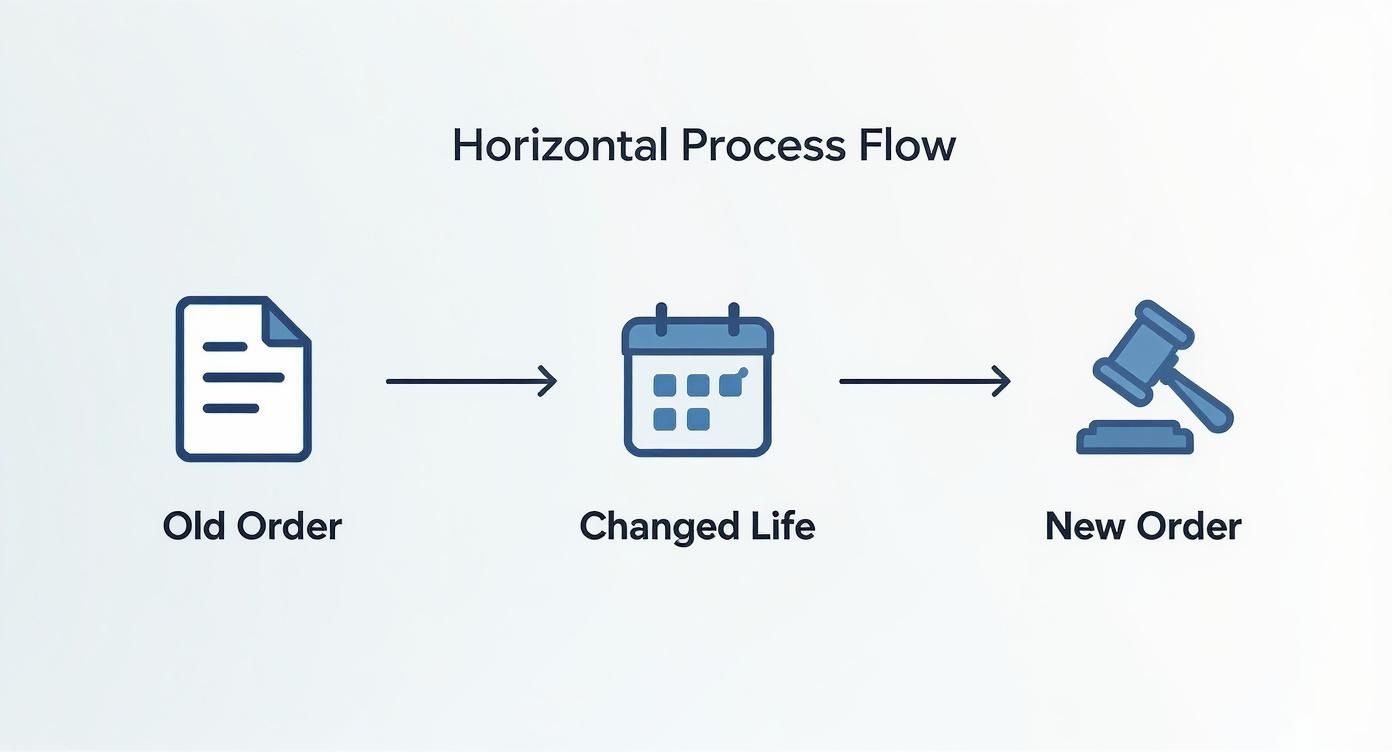
As you can see, the process is structured and methodical. Each step requires careful attention to detail and strict adherence to procedural deadlines.
The Role of the Appellate Brief and Oral Argument
The appellate brief is the most important document in your appeal. It is your attorney’s chance to tell the story of your case to the appellate judges, identify the specific legal errors, and explain, using case law and statutes, why those errors demand a different outcome. A well-written brief is clear, persuasive, and grounded entirely in the facts contained in the appellate record.
An appellate brief is not a simple summary. It is a sophisticated legal argument designed to convince a panel of judges that a miscarriage of justice occurred in the trial court and that they have a duty to correct it.
After the briefs are filed by both sides, the court may schedule an oral argument. This is a formal hearing where attorneys appear before the panel of appellate judges to answer questions and argue the most important points from their briefs. It is a chance for the judges to probe the strengths and weaknesses of each side’s position before they make a final decision.
The Appellate Court's Decision
After reviewing the record, the briefs, and hearing oral argument, the appellate court will issue a written opinion. The court has several options:
- Affirm: The court can agree with the trial judge and let the original order stand.
- Reverse and Render: The court can overturn the trial judge’s decision and issue a new, correct judgment.
- Reverse and Remand: The court can overturn the decision and send the case back to the trial court for a new hearing or trial, with instructions to correct the legal errors.
The appellate process is complex and requires specialized skill. Having an experienced appellate attorney who understands the nuances of both family law and the Texas Rules of Appellate Procedure is critical to giving you the best chance to secure a just outcome.
If you believe the court made a mistake in your family law case, our appellate attorneys can help you seek a fair outcome. Contact The Law Office of Bryan Fagan today for a free consultation.
Gathering Evidence for an Appeal: The Appellate Record
In an appeal, you cannot introduce new evidence. The appellate court’s decision will be based solely on the evidence that was presented—or attempted to be presented—at the trial level. This collection of evidence is known as the “appellate record.” Your attorney’s job is to meticulously comb through this record to build your case for appeal.
Think of the appellate record as the official transcript of your trial. It includes the clerk’s record (all the documents filed in the case) and the reporter’s record (a word-for-word transcript of everything said in court). Understanding the importance of evidence in the record is critical, as anything left out cannot be considered by the appellate judges.

Identifying Errors in the Record
The key to a successful appeal is finding reversible errors within the appellate record. An appellate attorney acts like a detective, searching for mistakes the trial judge made that harmed your case. This requires a deep understanding of the Texas Family Code and the Rules of Evidence.
Here’s what your attorney will be looking for:
- Improperly Admitted or Excluded Evidence: Did the judge allow the other side to present evidence that should have been excluded (like unreliable hearsay)? Or, more importantly, did the judge refuse to let you present critical evidence, like your child's medical records or testimony from a teacher? This is a common and powerful basis for appeal.
- Lack of Evidentiary Support: The appellate attorney will scrutinize the record to see if there was enough evidence to legally support the judge’s final decision. If the ruling was based on speculation rather than facts, it may be an abuse of discretion.
- Procedural Mistakes: The reporter’s record will show if your trial attorney properly objected to errors during the hearing. These objections are crucial because they “preserve” the error for the appeal. Without a timely objection, you may lose the right to complain about the mistake later.
The Power of the Reporter's Record
The reporter’s record, or trial transcript, is often where the most critical errors are found. It captures the testimony of witnesses, the arguments of the attorneys, and the rulings of the judge in real-time. This is where your appellate attorney can pinpoint specific moments where the law was misapplied.
A single sentence in a trial transcript can be the foundation for an entire appeal. For example, a judge’s comment revealing a bias or a clear misunderstanding of the law can be powerful proof of reversible error.
What to Look for in the Transcript:
- Erroneous Rulings: Did the judge make a mistake in ruling on an objection? This can change the entire course of a hearing.
- Witness Testimony: Was a key witness prevented from answering an important question? Did the other side’s witness offer testimony that lacked a factual basis?
- Judge's Comments: Sometimes a judge will make comments on the record that show they failed to consider all the evidence or applied the wrong legal standard.
In complex cases involving issues like parental alienation, the expert testimony in the record is especially critical. Reviewing that testimony to see if it was properly considered is a key part of the appellate review. Understanding options like parental alienation treatment helps inform whether the trial court gave proper weight to expert opinions. By carefully analyzing every page of the record, your appellate attorney can build a powerful, evidence-based case demonstrating that a legal error occurred and that justice requires a new outcome.
Appealing an Unfair Modification Decision
You have just received the final order in your child custody modification case, and the outcome feels profoundly wrong. You presented strong evidence and believed you were acting in your child’s best interest, but the court ruled against you. This is a deeply discouraging experience, but it is crucial to remember that a trial judge's decision is not always the last word.
The Texas appellate process exists to correct legal errors and ensure that family law rulings are fair, just, and truly in the best interest of the child. An appeal is your opportunity to have a higher court review the trial proceedings to determine if a significant mistake was made. It is a path to seek justice when you feel the trial court failed to provide it.
Understanding the "Abuse of Discretion" Standard
When you appeal a family law case, the appellate court reviews the trial judge's decision using a standard called “abuse of discretion.” This is a critical legal concept to understand because it defines the challenge you face on appeal.
It does not mean the appellate judges simply would have decided the case differently. It means you must prove the trial judge made a decision that was arbitrary, unreasonable, or without reference to guiding legal principles. In short, the ruling was so far off the mark that it cannot be allowed to stand.
A trial judge has broad discretion in family law. An appellate court will not reverse a decision just because it was a close call. To win an appeal, you must show the judge ignored the facts, misapplied the law, and reached a result that is clearly unjust.
Meeting this high standard requires a skilled appellate attorney who can build a powerful argument based on the trial record. The goal is to demonstrate that the judge's error was not minor—it was a "reversible error" that caused an improper judgment.
Common Grounds for an Appeal
A successful appeal is built on identifying specific legal mistakes made during your trial. It’s not enough to say the outcome was unfair; you must point to the precise error that caused the unfair outcome. Some of the most common grounds for appealing a modification order include:
- Ignoring the Child's Best Interest: The judge failed to properly analyze or weigh the "Holley factors," which are the legal foundation for determining what is best for a child in Texas.
- Wrongfully Excluding Evidence: The court refused to allow you to present critical evidence—like a school counselor's testimony or important documents—that was necessary to prove your case.
- Lack of Supporting Evidence: The judge's ruling was not supported by sufficient evidence in the record. A decision based on speculation or personal bias instead of facts is an abuse of discretion.
- Major Procedural Mistakes: The court violated the Texas Rules of Civil Procedure or the Rules of Evidence, which deprived you of a fair hearing. This can be especially relevant in cases involving fundamental parental rights, such as those concerning child custody rights for fathers.
An appellate attorney will meticulously review every document and every word of testimony from your trial to find a reversible error. Pinpointing that mistake—and showing how it harmed your case—is the key to a successful appeal and your chance at a fair outcome.
If you believe the court made a mistake in your family law case, our appellate attorneys can help you seek a fair outcome. Contact The Law Office of Bryan Fagan today for a free consultation.
Answering Your Questions About the Texas Appeals Process
When facing an unjust court order, the idea of an appeal can seem intimidating. The process is complex and filled with legal terms and strict deadlines. Having clear answers to your questions can help demystify the process and empower you to make informed decisions about seeking justice for your child.
Here are answers to some of the most common questions we hear from clients considering a family law appeal.
How Long Do I Have to Appeal a Custody Order in Texas?
Time is of the essence. In most Texas family law cases, you have a very strict deadline to begin the appellate process. You must file a Notice of Appeal with the trial court clerk within 30 days of the date the final order was signed by the judge.
If you file certain post-judgment motions, such as a Motion for New Trial, this deadline can be extended to 90 days. However, these motions also have their own tight deadlines. Missing the deadline to file your Notice of Appeal is fatal to your case—the appellate court will lose jurisdiction, and you will lose your right to appeal forever. This is why it is critical to contact an appellate attorney immediately after receiving an unfavorable ruling.
Can My Child Tell the Appellate Judges Who They Want to Live With?
No. An appeal is not a new trial, and no new testimony is taken. The appellate court’s decision is based exclusively on the written “appellate record” from the trial court. This record includes transcripts of what was said in court and copies of all documents filed.
If your child (age 12 or older) spoke with the trial judge in chambers, a record of that interview should be part of the appellate record. Your attorney can argue that the trial judge ignored or gave improper weight to the child’s preference, but the child will not have another opportunity to speak with the appellate judges. The appeal focuses on whether the trial judge made a legal error based on the information they had at the time.
What is the Difference Between a Trial and an Appeal?
Trials and appeals are two very different legal proceedings. A trial is about establishing the facts, while an appeal is about reviewing the law.
| Trial | Appeal |
|---|---|
| Purpose: To present evidence and determine the facts of the case. | Purpose: To review the trial record for legal errors. |
| Decision-Maker: One trial judge. | Decision-Maker: A panel of three or more appellate justices. |
| Key Events: Presenting evidence, witness testimony, cross-examination. | Key Events: Preparing the record, writing legal briefs, oral argument. |
| Focus: Who to believe, what happened. | Focus: Did the judge apply the law correctly? Was the process fair? |
| Outcome: A final judgment or order. | Outcome: An opinion that affirms, reverses, or remands the trial court's order. |
Understanding this distinction is key. An appeal is a highly academic and technical process focused on legal argument, not emotional pleas or new facts.
Do I Have to Go to Court for an Appeal?
Not usually. The vast majority of the work in an appeal happens behind the scenes and is handled by your attorney. This includes preparing the appellate record and writing the appellate brief. The primary event that may require a court appearance is oral argument.
Oral argument is a formal hearing where attorneys argue their case before the panel of appellate judges. It is an opportunity for the judges to ask questions directly to the lawyers. Clients typically do not speak at oral argument and are not required to attend, although they may choose to do so. Many appeals are even decided "on the briefs" without any oral argument at all.
If you believe the court made a mistake in your family law case, our appellate attorneys can help you seek a fair outcome. Contact The Law Office of Bryan Fagan, PLLC today for a free consultation at https://familylawcourtappeals.com.