If you believe your Texas family law case was decided unfairly, you are not alone. The feeling that the court made a mistake in a matter as personal as divorce or child custody can be deeply unsettling. The path to justice may feel unclear, but finding the right appellate attorney is the critical first step toward seeking a fair outcome.
You are no longer looking for a trial lawyer; you need a strategic advocate who understands the specific rules and procedures of the Texas appeals process. This guide is designed to help you find that specialist.
Starting Your Search for an Appellate Advocate

When seeking an appeal, a general Google search for a “family law attorney” can be misleading. You need to find lawyers with specific experience in appellate law. To build a solid list of potential attorneys, it is best to consult official organizations that vet and certify Texas lawyers for this specialized work.
Building Your Initial List of Candidates
Your goal is to create a shortlist of highly qualified professionals who focus on family law appeals. These resources will help you identify true specialists.
Start your research here:
- The State Bar of Texas: This is your first stop. You can instantly verify if an attorney is licensed, in good standing, and check for any public disciplinary history. It’s a non-negotiable first step.
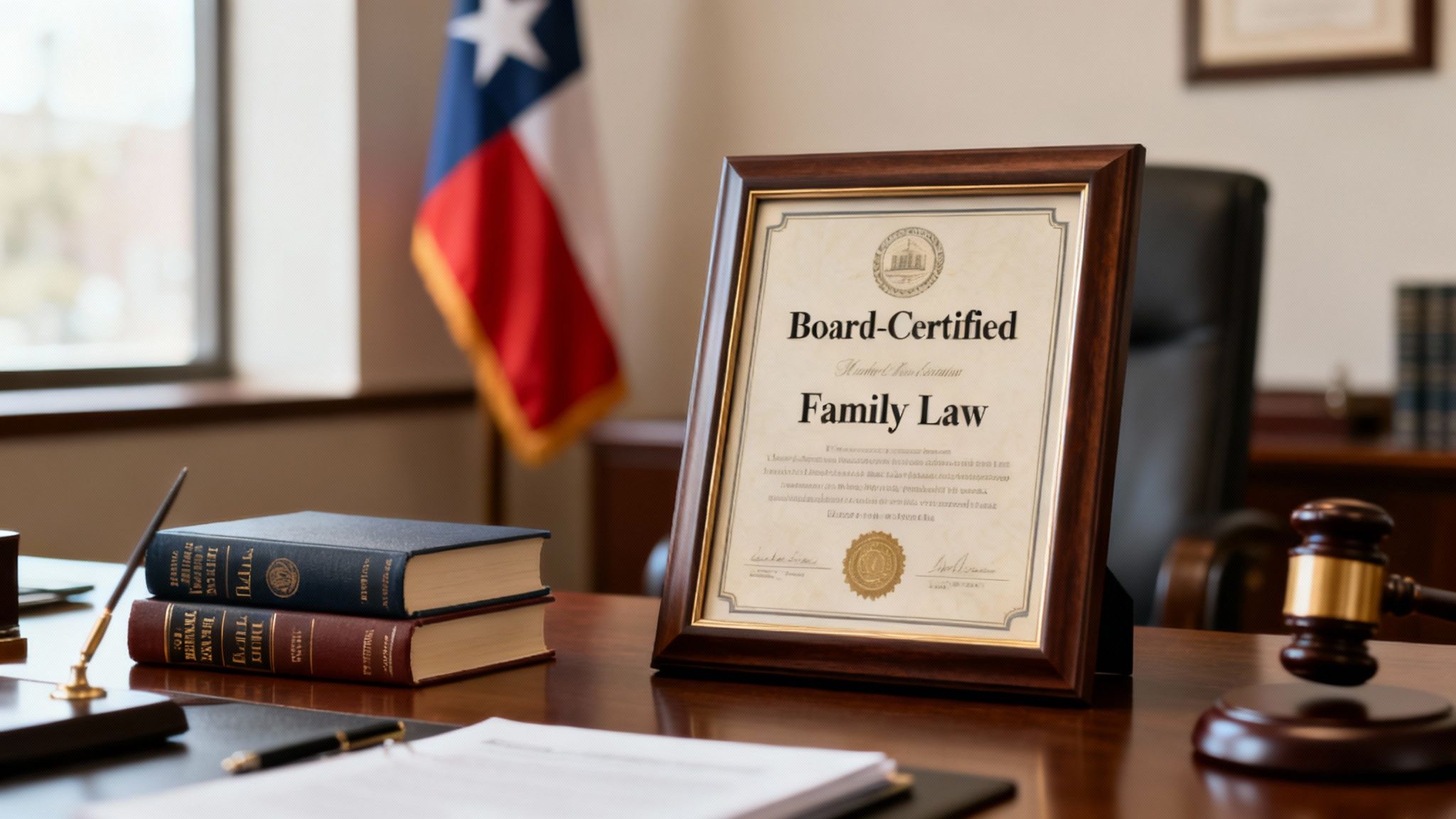
- The Texas Board of Legal Specialization (TBLS): This is the gold standard. When you see an attorney is “Board-Certified in Family Law,” it means they have passed a rigorous exam, demonstrated extensive courtroom experience, and earned positive reviews from judges and peers. An even smaller subset of attorneys may also have appellate specialization, which is a powerful signal of genuine expertise.
- Local Bar Associations: Don’t overlook your local county bar, like the Houston Bar Association or the Dallas Bar Association. They often have lawyer referral services that can point you to reputable attorneys who know the local appellate court procedures.
Looking Beyond the Basics
Once you have a few names, investigate their professional footprint online. How an attorney presents themselves and how others talk about them can be very telling. Understanding the basics of online reputation management for lawyers can give you a better lens through which to evaluate what you find.
This initial phase is about moving from a wide search to a curated list of contenders. By focusing on appellate credentials and specialization from the start, you are laying the groundwork to find an advocate who can effectively handle your complex divorce, sensitive child custody, or critical family law appeal.
Understanding How Appeals Differ from Trials
If you feel the trial court made a mistake, it’s crucial to understand that an appeal is not a second trial. This is a fundamental concept in appellate law. You do not present new evidence or re-argue the facts. Instead, the appeal is a highly technical legal process focused exclusively on identifying errors made by the trial judge.
An attorney who primarily handles trials may not have the specific skill set required for appellate work, which is governed by the dense Texas Rules of Appellate Procedure and the Texas Family Code.
The Standard of Review: Why It Matters
In an appeal, the higher court does not simply substitute its own judgment for the trial judge’s. It reviews the case based on a specific legal lens called the “standard of review.” The most common standard in family law is “abuse of discretion.”
- Abuse of Discretion (Plain English Definition): This legal term means the trial court judge made a decision that was arbitrary, unreasonable, or without reference to any guiding rules or principles. Your appellate attorney’s job is not to prove the judge was a bad person, but that a specific ruling was legally indefensible based on the law and the evidence presented at trial.
An appeal is won or lost based on your attorney’s ability to comb through the trial record, identify these errors, and present them persuasively in a formal written argument known as a “brief.”
Common Reversible Errors in Texas Family Courts
A successful appeal must identify a “reversible error”—a mistake so significant that it likely caused an improper judgment. Not every mistake qualifies. Common examples in Texas family law include:
- Mischaracterizing Property: Incorrectly classifying separate property as community property (or vice-versa), leading to an unjust property division.
- Improperly Applying Child Custody Laws: Disregarding the legal presumptions or factors required by the Texas Family Code when making decisions about children.
- Admitting Improper Evidence: Allowing testimony or documents into the record that should have been excluded, which then unfairly influenced the outcome.
- Denying Due Process: Failing to give a party proper notice or a meaningful opportunity to be heard, such as in cases involving a protective order.
For particularly complicated cases, such as those with international elements, you also need someone who understands the critical importance of accurately translating legal documents.
Ultimately, to seek justice after an unfair ruling, you need more than just a lawyer. You need a specialist. Hiring a dedicated Texas family law appeal attorney isn’t a luxury; it’s essential for a fair chance at success.
What to Ask During Your Initial Consultation

You have scheduled a few consultations. Think of this meeting as an interview—where you are hiring a legal strategist. This is your opportunity to determine if this person has the specialized skill set to handle your appeal and if you can build a trusting partnership.
Going into the meeting with a list of targeted questions will help you evaluate whether an attorney has the right experience and communication style for the unique demands of an appeal.
Questions About Strategy and Appellate Experience
You need to understand how an appellate attorney thinks. Forget generic questions and dig into the specifics that matter for an appeal.
Here are a few areas to focus on:
- Appellate Focus: “What percentage of your practice is dedicated to family law appeals versus trial work?” This helps you determine if they are a true appellate specialist.
- Relevant Experience: “Can you describe your experience with appeals involving issues similar to mine, such as complex property division or custody disputes?”
- Strategic Mindset: “Based on what you know so far, what potential reversible errors might exist in my case? What would be the first steps in reviewing the trial record?” This reveals their analytical process and strategic thinking.
- Understanding of the Process: “Can you explain the appellate timeline to me, from filing the notice of appeal to preparing the brief and oral argument?” A good appellate attorney can make complex procedures clear and understandable.
Evaluating Communication Style and Firm Process
An attorney’s legal skill means little if you cannot reach them or understand their explanations. Your peace of mind during the long appeals process depends on clear and consistent communication.
A good appellate attorney doesn’t just talk; they listen. They should make you feel heard, answering your questions with patience and clarity, not a wall of legal jargon.
Get into the details of what it’s like to work with them:
- “If I hire you, who will be my main point of contact for case updates?”
- “What is your firm’s policy on returning client calls and emails?”
- “How will you keep me informed about key deadlines and milestones in my appeal?”
To help you organize your thoughts, consider this checklist for your consultation.
Appellate Attorney Vetting Checklist
This table provides a structured way to cover your bases, ensuring you walk out with a clear picture of each candidate’s appellate capabilities.
| Area of Inquiry | What to Ask | Why It Matters |
|---|---|---|
| Appellate Experience | “How many family law appellate briefs have you written in the past year?” | Gauges their current, practical experience in the core work of an appeal. |
| Strategic Approach | “What is the standard of review for the issues in my case, and how do you plan to address it?” | Reveals their understanding of the fundamental legal hurdles in an appeal. |
| Record Preparation | “How does your firm handle the process of ordering and reviewing the trial record?” | The trial record is the foundation of the entire appeal; this process must be meticulous. |
| Communication | “Who is my primary contact? What’s your typical response time?” | Sets expectations for how accessible and responsive the firm will be. |
| Billing & Fees | “Can you provide a detailed breakdown of your fee structure for an appeal?” | Ensures transparency and helps you understand the full financial commitment. |
| Case Assessment | “What are the potential strengths and weaknesses of my case for appeal?” | Shows they can provide a realistic, honest assessment, not just what you want to hear. |
Getting clear answers to these questions will empower you to make an informed, confident decision.
Ultimately, understanding the process and the paperwork is key. For example, if you’re presented with a Waiver of Service, your attorney should take the time to clearly explain what it means and its legal consequences before you sign. That commitment to clear communication is the sign of a lawyer who truly partners with their clients.
Understanding Legal Fees and Firm Resources for an Appeal
Let’s discuss the cost of an appeal. Being clear on the financial commitment from the beginning can reduce stress throughout the process.
Most family law attorneys work on an hourly basis and require a retainer upfront. A retainer is essentially a deposit for legal services. You pay a lump sum, and your lawyer bills their time against that amount.
It is critical to understand that a retainer is not a flat fee for the entire appeal. Once the initial funds are used, you will be asked to replenish the retainer. Always request a written fee agreement that outlines the hourly rates for everyone who may work on your case, from the lead appellate attorney to the paralegal. To get a better idea of what’s standard, you can learn more about how an average lawyer retainer fee works.
Assessing a Firm’s True Value and Resources
The lead attorney’s hourly rate is just one part of the equation. For an appeal, you need a firm with the right resources and team to handle a legally intensive process.
An appeal is not a solo mission. It is a massive undertaking that requires a team approach for deep legal research, a painstaking review of the trial record, and the sophisticated writing required for briefing—the formal written arguments presented to the appellate court.
When evaluating a firm, consider its depth:
- Do they have experienced paralegals who can manage the large trial record efficiently (at a lower billable rate)?
- Do they have the research tools and staff to support the writing of a comprehensive appellate brief?
- Do they have experience with oral arguments before the Court of Appeals?
An appeal requires a firm with the capacity for meticulous, time-intensive legal work. A lone attorney may be a fantastic trial lawyer, but they may simply not have the support staff or infrastructure to dedicate hundreds of hours to a single appellate brief while juggling all their other cases.
Looking Beyond the Price Tag for a Fair Outcome
It is natural to be cost-conscious. However, choosing a lawyer based on the lowest hourly rate can be a mistake, costing you more in the long run. An inexperienced lawyer might take twice as long to research a legal issue that an appellate specialist already knows.
The right question isn’t, “Who costs the least per hour?” It’s, “Who delivers the most value and has the resources to handle my appeal effectively?”
A firm’s resources and staffing are tangible factors that directly impact your chances of success. When comparing firms, learn more about how to compare law firms based on concrete metrics and team capacity. Ask for an estimate of the hours needed for key phases of the appeal, such as record review and brief writing. A well-equipped firm provides the best opportunity to seek justice and correct an unfair outcome.
Critical Red Flags to Watch Out For

When you are trying to correct an unjust result from a trial court, the last thing you need is an attorney who creates more problems. Hiring the wrong person for an appeal can be devastating for your case and your financial well-being. Knowing the warning signs is a critical part of the selection process.
Above all, trust your instincts. If something feels off during an initial consultation, it probably is. The attorney-client relationship is built on trust, and a shaky start often signals future problems.
Guarantees and Unprofessional Behavior
One of the biggest red flags is an attorney who guarantees a specific outcome. No ethical, experienced lawyer can ever promise a win, especially in an appeal where success depends entirely on identifying legal errors in the existing record. A good attorney will discuss potential legal arguments and strategy, not make empty promises.
Pay close attention to their professional demeanor:
- Disrespecting Judges: An attorney who badmouths appellate or trial judges is demonstrating poor judgment. Effective lawyers build credibility with the court system; open disrespect harms their client’s case.
- Focusing on Personalities: An attorney who is overly focused on criticizing the opposing counsel or the trial judge may be driven by ego rather than sound legal strategy.
- A Disorganized Office: A chaotic office, missed appointments, and general disorganization are often a direct reflection of how they will manage the critical details and deadlines of your appeal.
This conduct suggests an attorney who operates from emotion instead of a calm, strategic plan. You need a focused professional who is respected by the courts.
Vague Strategies and Poor Communication
From day one, communication should be prompt and clear. If an attorney is difficult to reach for an initial consultation, it will likely be even harder to get updates once they have been retained. This is a reliable early warning sign.
Equally concerning is an attorney who cannot outline a clear game plan for your appeal. A lawyer who just talks about “fighting hard” without explaining how they will analyze the record and what legal arguments they might make is a major concern.
A good appellate attorney should be able to walk you through the next steps, the likely challenges, and their proposed plan in plain English. If you leave a consultation feeling more confused than when you arrived, they are not the right fit for you.
They should be able to explain core appellate concepts, like what constitutes “reversible error,” in a way you can understand. This demonstrates not only their expertise but also their commitment to being a true partner in your case.
Your Top Questions About Hiring a Family Law Attorney, Answered
Stepping into the world of appellate law can feel overwhelming, especially when you are already dealing with the stress of an unfair court ruling. It’s normal to have questions. Getting clear, practical answers is the first step toward seeking justice.
Let’s walk through some of the most common questions we hear from people seeking to appeal a Texas family law order.
What’s the Real Difference Between a Trial Lawyer and an Appellate Lawyer?
Think of it like two different kinds of doctors. Your trial lawyer is the surgeon in the operating room—they work on the front lines in the courtroom. Their job is to present evidence, question witnesses, and persuade the judge based on the facts. Their focus is on the trial itself.
An appellate lawyer is the specialist you see after the trial is over and you believe a legal mistake was made. They don’t redo the trial. Instead, they meticulously review the entire record of what happened, looking for specific legal errors made by the trial judge.
Their entire focus is on identifying issues that could overturn the original decision, such as:
- Abuse of discretion: This happens when a judge makes a ruling that is arbitrary, unreasonable, or completely outside the bounds of established legal principles.
- Misapplying the Texas Family Code: The judge may have interpreted or applied the law incorrectly, leading to an unjust result in your case.
- Reversible error: This is a legal mistake so significant that it very likely caused the wrong outcome. It’s not just a minor slip-up; it’s a game-changing error that undermines the fairness of the judgment.
While you needed a sharp trial lawyer for the initial fight, challenging the final ruling requires an experienced appellate attorney who specializes in this detailed legal analysis.
How Big a Deal Is Board Certification in Texas Family Law?
It’s a very big deal. Think of Board Certification by the Texas Board of Legal Specialization as an attorney’s Ph.D. in their specific field. It is one of the highest credentials a Texas lawyer can earn and a clear signal that they have mastered a single area of law.
To become board-certified in Family Law, an attorney must demonstrate substantial, hands-on experience, pass a rigorous exam, and receive favorable reviews from judges and other lawyers.
While there are many excellent lawyers who are not board-certified, choosing one who is provides an extra layer of confidence. You know you are hiring someone with proven, specialized expertise in the complexities of Texas divorce, child custody, and high-stakes property division cases—knowledge that is foundational to a successful appeal.
What Should I Actually Bring to a Consultation?
To make your first meeting as productive as possible, some preparation goes a long way. The more organized you are, the more quickly an attorney can assess your case and provide meaningful, strategic advice.rs who are not board-certified, choosing one who is provides an extra layer of confidence. You know you
Bring any key court documents you have, especially the final judgment or order you wish to appeal. If available, also bring any temporary orders, the original petition, and any findings of fact and conclusions of law issued by the court.
Beyond documents, it is helpful to write down a simple timeline of major events in your case and a list of your most pressing questions. This preparation helps the attorney understand the history of your case and allows them to focus on the key legal issues relevant to an appeal.
If you believe the court made a mistake in your family law case, our appellate attorneys can help you seek a fair outcome. Contact The Law Office of Bryan Fagan today for a free consultation.